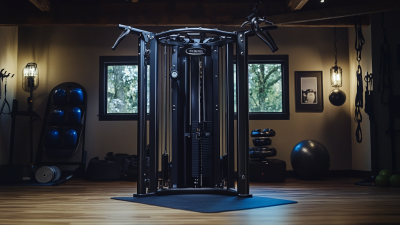
China Top 10 Functional Trainer Manufacturers
China’s Functional Trainer manufacturers serve a market shaped by changing workout habits and practical equipment needs. Buyers compare more than price. They examine cable smoothness, frame stability, adjustment range, finish quality, and access to replacement parts. Those details matter when a machine faces daily use in a busy gym.
The American College of Sports Medicine’s Worldwide Survey of Fitness Trends 2024 placed functional fitness training among its leading trends, ranking it ninth. The survey reflects professional perspectives; it is not a sales report for functional trainers. That distinction matters. It signals interest in functional exercise, but does not prove demand for any specific machine or manufacturer. Gray Cook, physical therapist and co-founder of Functional Movement Systems, is known for the coaching maxim: “First move well, then move often.” His principle offers a useful lens for assessing equipment: movement options should support controlled, purposeful training, not just an impressive specification sheet.
This list of China-based manufacturers should therefore be read as a starting point for supplier research, not a universal ranking. Product catalogs can look similar. Weld quality, pulley alignment, warranty terms, customization options, and export support may reveal more. Ask for current specifications and test samples where possible. Small details count. A cable that tracks smoothly under load feels different from one that catches halfway through a repetition. Company capabilities also change, so buyers should verify claims directly. That extra check is easy to overlook. It is also where a promising shortlist can become a reliable purchasing decision.
What Functional Trainers Are and How They Work
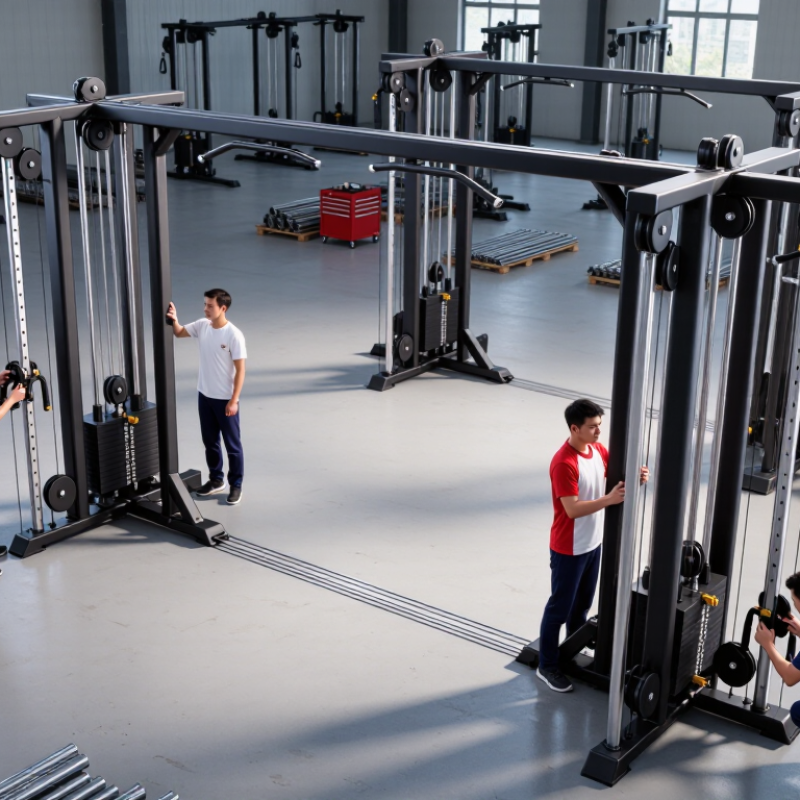
A functional trainer uses cables, pulleys, and resistance to let users move through varied exercise paths. Many models have two adjustable cable columns, each connected to a weight stack. Pulling a handle lifts the selected plates, creating resistance throughout the movement. Set the pulleys high for a downward press or low for a standing curl. The exact feel depends on the pulley ratio and cable design.
Movement stays flexible. Users can train one side at a time, work across the body, or attach a bar for two-handed exercises. A step back from the machine adds cable tension; a shorter stance may reduce it. Small details matter. Check that the handles move smoothly and the pulley locks securely at each height. Keep the cable clear of your face and use controlled repetitions, especially when changing direction. The machine can support strength, balance, and coordination work, but it does not automatically improve any of them. Good setup matters, and it can take practice to find a comfortable stance. For a gym, compare the usable cable travel, adjustment range, stack increments, and frame stability—not just the number of attachments supplied.
China’s Functional Trainer Manufacturing Landscape
China’s functional trainer manufacturing landscape ranges from focused equipment workshops to larger factories with integrated fabrication and finishing. Capabilities vary, even among suppliers offering similar product specifications.
Some facilities handle frame cutting, welding, and powder coating in-house; others depend on outside partners. A typical unit combines a steel frame, adjustable pulleys, cable, weight stack, and moving carriage. Check the pulley path under load, not only the frame’s appearance. A smooth showroom demonstration may not reveal noise or cable drag after repeated use.
Small details matter.
For a practical supplier assessment, compare drawings, materials, weld consistency, and adjustment points against a physical sample. Ask how cable tension, moving parts, and frame stability are checked during production. Request inspection records where available, and clarify what each test actually measures.
It varies. A sample should be used through its full range of motion, with settings changed as an ordinary user would. Also review packaging, spare-part availability, and communication about custom dimensions or finishes.
These details can shape delivery and maintenance, yet they are easy to overlook when attention stays on price. Factory capacity figures deserve context too: confirm which production steps they cover and how schedules change during busy periods.
Criteria for Ranking China’s Leading Functional Trainer Manufacturers
Ranking China’s leading functional trainer manufacturers should depend on measurable performance, not catalog size or a low quoted price. The ACSM 2024 Worldwide Survey of Fitness Trends placed functional fitness training tenth among its ranked trends. That signals professional interest, but it does not measure equipment sales or factory quality. The distinction matters. A useful ranking should examine frame stability, cable travel, adjustment range, rated load, and repeatability across production units.
Factory evidence matters more than showroom polish. Review documented safety tests against ISO 20957-1, which sets general requirements and test methods for stationary training equipment. Check whether cable systems run smoothly under repeated use, whether welds are consistent, and whether adjustment pins lock securely. Ask for production records, inspection procedures, spare-parts availability, and warranty terms. During an audit, test a unit at different pulley heights and inspect the cable near its termination. Small defects show up there. Still, one sample cannot represent every shipment, and ranking weights involve judgment. Buyers should compare the same specifications and request records from more than one production batch.
China Top 10 Functional Trainer Manufacturers - Criteria for Ranking China’s Leading Functional Trainer Manufacturers
This is a proposed evaluation framework, not a ranking of named companies. The percentages are suggested weighting values and should be applied only after reviewing current, verifiable manufacturer evidence.
| No. | Evaluation Criterion | Weight | Evidence to Review | Why It Matters |
|---|---|---|---|---|
| 1 | Product Range and Functional Trainer Design | 12% | Current product catalog; machine configurations; specifications for cable travel, pulley adjustment, resistance options, and accessories. | A relevant range and clearly documented designs help buyers compare equipment for different training spaces and use cases. |
| 2 | OEM and ODM Capability | 12% | Documented customization options, engineering drawings, sample-development process, and written procedures for design changes. | Verifiable development processes help establish whether a supplier can meet project-specific requirements rather than only offer standard models. |
| 3 | Manufacturing Capacity and Process Control | 12% | Factory audit records, production-process descriptions, equipment lists, capacity statements, and production schedules supported by records. | Capacity claims are more useful when supported by evidence of facilities, processes, and the ability to plan and monitor production. |
| 4 | Quality Management and Traceability | 12% | Valid quality-management certificates where applicable; inspection plans; incoming, in-process, and final inspection records; component traceability procedures. | Documented controls can help identify defects, track components, and maintain consistency across production batches. |
| 5 | Materials and Component Specifications | 10% | Technical data for frame materials, coatings, cables, pulleys, bearings, upholstery, and other major components; supplier or test documentation where available. | Specific material and component information allows buyers to assess durability-related claims and compare products on a consistent basis. |
| 6 | Product Safety and Performance Testing | 10% | Applicable test reports, inspection results, operating and assembly instructions, load or endurance test methods, and documented corrective actions. | Relevant testing and clear user instructions support safer installation and use; applicable requirements depend on the destination market and product. |
| 7 | Export Documentation and Market Compliance | 10% | Examples of export documents and product compliance documents relevant to the intended destination, verified for scope, validity, and issuing organization. | Import and product requirements vary by market, so documentation should be checked against the buyer’s destination and specific product configuration. |
| 8 | Customization and Configuration Control | 8% | Written procedures for finish, dimensions, accessories, packaging, labeling, and revision approval; records linking approved specifications to production. | Configuration control helps ensure that customized orders are produced and packed according to the buyer-approved specification. |
| 9 | Warranty, Spare Parts, and After-Sales Support | 7% | Written warranty terms, spare-parts lists, parts availability policy, service response procedure, and installation or maintenance documentation. | Clear support terms and parts information help buyers plan equipment maintenance over the product’s service life. |
| 10 | Lead-Time Planning and Export Logistics | 7% | Written order milestones, production lead-time estimates, packaging specifications, shipment records where available, and agreed dispatch terms. | Transparent planning makes it easier to coordinate production, freight, delivery schedules, and receiving arrangements. |
Suggested scoring method: rate each criterion from 1 to 5 using verified evidence, multiply each rating by its weight, and compare the resulting weighted totals. Confirm certificate validity, test-report scope, and commercial claims directly before making a purchasing decision.
Profiles of China’s Top 10 Functional Trainer Manufacturers
A useful profile of each manufacturer should go beyond catalog photos. Compare frame dimensions, cable travel, pulley smoothness, weight-stack increments, and weld consistency. These details affect daily use. Grand View Research valued the global fitness equipment market at USD 16.04 billion in 2022 and forecast 5.3% annual growth from 2023 to 2030. This broad category provides market context, not a functional-trainer-specific estimate. The profiles can also examine factory audits, customization options, spare-parts support, and documented quality checks.
Look closely at practical evidence: a cable should move evenly under load, and adjustment pins should seat securely. Ask whether production samples match the final specification, especially when frame colors or attachment sets change. Still, a top-ten list can oversimplify differences between factories. A large catalog does not prove consistent quality, and one sample cannot represent every production run. That deserves scrutiny.
Tips: Request a current specification sheet and inspection records. Test the pulleys and locking points on a finished unit. Compare stated load capacity with the stack and cable configuration.
How the Top 10 Manufacturers Compare in Products and Capabilities
Comparing China’s top ten functional trainer manufacturers is less about ranking identical machines and more about matching designs to facility needs. Product ranges can include compact dual-pulley stations, adjustable cable columns, and multi-user systems. Compare stack weight, pulley travel, frame footprint, and attachment storage. Small details matter. A handle that moves smoothly through the final inches can be more useful than a long feature list.
Manufacturing capabilities differ too. Some suppliers may offer more options for dimensions, upholstery, or resistance stacks, while others focus on repeatable standard models. Ask for technical drawings, load specifications, and details about factory inspection. Check whether welds are consistent and adjustment pins lock securely. These are practical checks, not proof of long-term performance. A polished catalog can still leave questions unanswered.
Service capability deserves equal attention. Request assembly instructions, spare-part lead times, and clear warranty terms before comparing quotations. If possible, inspect a sample unit and test its cable movement under light and heavy loads. That takes time. It may also reveal awkward adjustments that photos hide. Manufacturers should be able to explain how they test equipment and manage production changes, but answers should be supported by records. Price alone offers a thin comparison.
Related Posts
-
The Ultimate Functional Trainer Buyers Guide: Essential Factors to Consider for Your Purchase
-
Ultimate Guide to Choosing the Right Home Rehab Equipment for Your Recovery
-

How to Exercise Safely for Seniors?
-
Navigating Trade Tariffs Chinese Manufacturing Thrives with Best Leg Rehab Machine
-
How to Choose the Best Workout Equipment for Your Fitness Goals?
-
Why Use a Knee Rehab Machine for Faster Recovery?