
How to Exercise Safely for Seniors?
Exercise For Seniors should begin with safety, not speed. The World Health Organization’s 2020 Guidelines recommend 150–300 minutes of moderate aerobic activity weekly for older adults. They also advise muscle-strengthening exercises on at least two days. Balance training matters, especially for people with reduced mobility.
The numbers are practical. A brisk 30-minute walk, five days weekly, can support heart health, stamina, and independence. Two weekly strength sessions might include chair stands, wall push-ups, and resistance-band rows. Begin gently. A sturdy kitchen counter can provide support during balance exercises. Keep the phone nearby.
Dr. Chhanda Dutta, former chief of the Clinical Gerontology Branch at the National Institute on Aging, has emphasized, “Exercise is an important part of healthy aging.” Her perspective reflects gerontology research and clinical practice. The Centers for Disease Control and Prevention reports that more than three million older adults visit emergency departments annually because of falls. That statistic makes preparation essential.
Still, guidelines are not guarantees. A person with arthritis may need shorter sessions. Someone taking blood-pressure medication may experience dizziness. Personal experience can reveal warning signs, but it cannot replace medical advice. Older adults should discuss new exercise plans with a qualified healthcare professional, particularly after illness, surgery, chest pain, or unexplained breathlessness.
Safety can feel slow.
That is acceptable.
The goal is not athletic performance. It is moving with confidence, preserving daily function, and adapting intelligently when the body sends a different message.
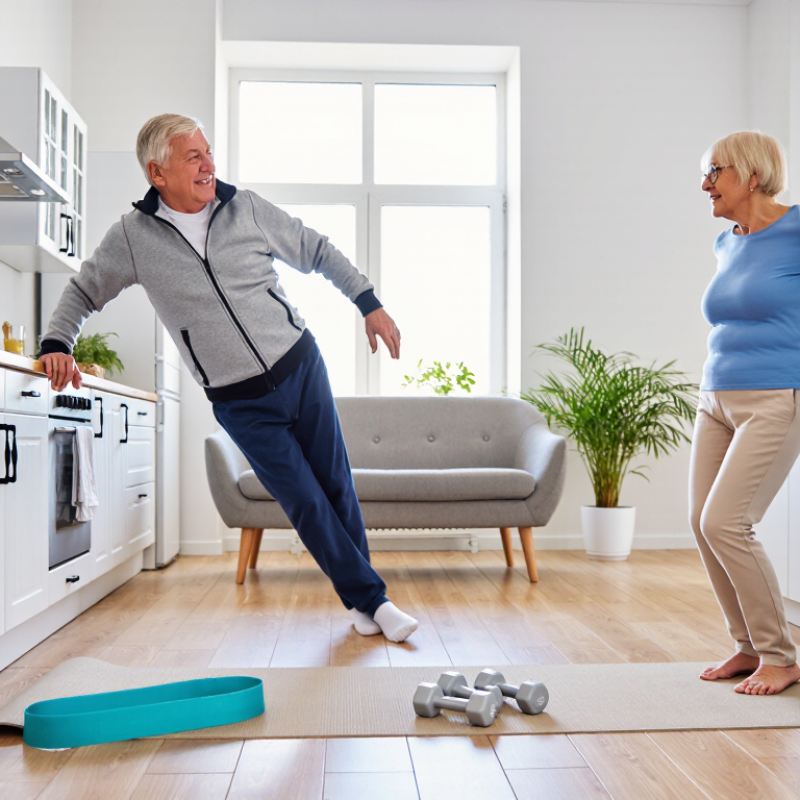
Assess Readiness: WHO Recommends 150–300 Minutes of Weekly Activity
How to Exercise Safely for Seniors?
Before chasing a weekly number, assess readiness. The World Health Organization recommends 150–300 minutes of moderate activity each week for older adults. Brisk walking, water exercise, and steady cycling can count. The effort should raise breathing slightly, while conversation remains possible. If you prefer vigorous exercise, 75–150 minutes may provide similar benefits.
Start with a short health check. Ask a healthcare professional for guidance if you have chest discomfort, uncontrolled blood pressure, severe joint pain, dizziness, or a recent illness. Review medicines that may affect balance or heart rate. Wear supportive shoes, choose a bright walking route, and keep water nearby. Begin with ten-minute sessions, perhaps after breakfast, then increase gradually.
Strength and balance deserve attention, too. Aim for muscle-strengthening activities on at least two days weekly. Try standing from a firm chair, lifting light household items, or holding a counter while raising your heels. Balance work can feel awkward at first. That is normal. Never practice beside a slippery rug. Stop if pain becomes sharp, breathing feels unusually difficult, or weakness appears. The 150-minute target is useful, but it is not a test of personal worth. Some weeks may be smaller. Consistency matters more than forcing a perfect schedule.
How to Exercise Safely for Seniors? - Assess Readiness: WHO Recommends 150–300 Minutes of Weekly Activity
| Exercise Dimension | Evidence-Based Recommendation | Practical Examples | Readiness and Safety Checks |
|---|---|---|---|
| Moderate-intensity aerobic activity | Aim for 150–300 minutes per week, spread across several days. Moderate activity generally increases breathing and heart rate while still allowing conversation. | Brisk walking, water aerobics, cycling on level ground, dancing, or active gardening. | Begin with shorter sessions if inactive. Use a pace that feels manageable and increase duration gradually. |
| Vigorous-intensity aerobic activity | As an alternative, aim for 75–150 minutes per week, or combine moderate and vigorous activity for an equivalent amount. | Fast uphill walking, jogging, swimming laps, or cycling at a higher effort. | Higher intensity may not be appropriate for everyone. Increase intensity only after building a safe activity base. |
| Muscle-strengthening activity | Perform muscle-strengthening activities on 2 or more days per week, involving the major muscle groups. | Chair squats, wall push-ups, resistance bands, light weights, or controlled stair climbing. | Use controlled movements and comfortable resistance. Avoid holding the breath and stop if sharp pain occurs. |
| Balance and functional training | Older adults should perform multicomponent physical activity that emphasizes functional balance and strength on 3 or more days per week to help prevent falls. | Heel-to-toe walking, supported single-leg stands, sit-to-stand practice, tai chi, or stepping exercises. | Exercise near a stable support, keep walkways clear, and use assistance when balance is uncertain. |
| Flexibility and mobility | Include gentle mobility or stretching as part of a balanced routine. Stretching supports movement but does not replace aerobic, strength, or balance training. | Shoulder circles, ankle movements, calf stretches, hip mobility, and gentle range-of-motion exercises. | Move slowly, avoid bouncing, and stay within a comfortable range without forcing a joint. |
| Starting level for inactive adults | Some physical activity is better than none. Start with small amounts and gradually increase frequency, intensity, and duration over time. | Begin with 5–10 minutes of easy walking, then add a few minutes as tolerated. | Allow recovery between unfamiliar activities and monitor how the body responds later that day and the next day. |
| Health-condition assessment | People with chronic conditions or concerns about increasing activity should discuss an appropriate exercise plan with a qualified health professional. | A clinician or physical therapist can help adapt exercises for arthritis, osteoporosis, diabetes, heart disease, or mobility limitations. | Do not ignore new or worsening symptoms. Personalized guidance may be needed before vigorous or unfamiliar exercise. |
| Warning signs during exercise | Stop exercising and seek prompt medical advice for concerning or unusual symptoms. | Examples include chest pain, severe shortness of breath, fainting, new confusion, or sudden weakness. | Seek emergency care for severe, sudden, or life-threatening symptoms. |
| Weekly planning | Combine aerobic activity with strength and balance exercises instead of relying on only one type of movement. | Example: walking on 5 days, strength training on 2 days, and balance practice on 3 or more days. | Adjust the plan for fatigue, weather, pain, medication effects, and available support. |
| Reference: World Health Organization, Guidelines on Physical Activity and Sedentary Behaviour (2020). Recommendations shown are general guidance and should be adapted to individual health status, abilities, and goals. | |||
Related Posts
-
China Top Exercise Equipment for Seniors Suppliers
-
7 Best Exercise Machines For Seniors In 2026?
-

The Complete Guide to Sourcing Top Quality Exercise Machines for Seniors
-

2026 Top Exercises For Seniors To Stay Fit And Active?
-

Unlocking Quality: Effective Strategies to Source Top-tier Leg Rehab Machine Suppliers
-

Navigating Trade Tariffs Chinese Manufacturing Thrives with Best Leg Rehab Machine