
Why Use a Knee Rehab Machine for Faster Recovery?
Recovering from knee surgery or injury can feel slow, uncomfortable, and uncertain. A Knee Rehab Machine may support this process by guiding controlled movement when walking remains difficult. Many devices use adjustable motion, gentle resistance, or repeated exercises to encourage joint mobility. The goal is practical: reduce stiffness, rebuild confidence, and help the knee tolerate everyday movement again.
A rehabilitation professional should match the machine to the patient’s condition, healing stage, and surgical instructions. A device may assist with range of motion after ligament repair, joint replacement, or other procedures. It cannot replace skilled assessment. Pain levels, swelling, incision healing, and muscle control still require careful observation. Small details matter, such as keeping the knee aligned and stopping when sharp pain appears.
It is not a magic shortcut.
Evidence supports structured rehabilitation, but results vary between individuals. Some patients progress quickly; others need more time because of weakness, fear, or persistent swelling. A Knee Rehab Machine works best when used consistently and correctly, alongside exercises prescribed by a qualified clinician. Even then, the process is not perfectly predictable. Users may need to adjust the duration, angle, or resistance as recovery changes. That flexibility can be frustrating, yet it reflects real rehabilitation rather than a fixed formula. Understanding these benefits and limits helps patients make safer, more informed decisions about machine-assisted knee recovery.
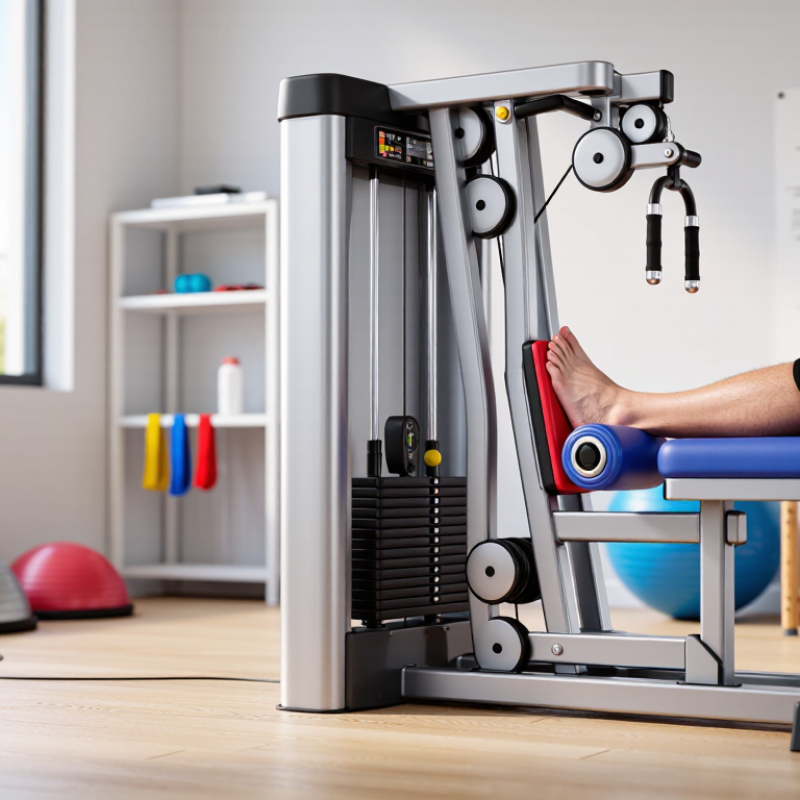
What Knee Rehab Machines Are: CPM, ROM, and Motor-Assisted Systems
A knee rehab machine is not one device. It usually means CPM, ROM, or motor-assisted equipment. CPM gently moves the knee through a preset arc while the patient remains relaxed. ROM trainers focus on controlled bending and extension. Motor-assisted systems add power when muscles cannot complete the movement independently.
CPM may help patients tolerate early motion after surgery, especially when stiffness is a concern. However, evidence is less impressive than advertisements often suggest. The 2014 Cochrane review found little clinically important improvement from routine CPM after total knee replacement. The 2022 American Academy of Orthopaedic Surgeons guideline also found no meaningful routine benefit. That does not make CPM useless. It means patient selection matters.
ROM and motor-assisted devices can provide visible angles, slow repetition, and safer practice during painful sessions. A therapist can adjust the range after swelling changes around the kneecap. The patient may begin at 40 degrees, then progress gradually. The World Health Organization reports that musculoskeletal conditions affect about 1.71 billion people worldwide, increasing demand for structured rehabilitation. Still, machines cannot replace strength training, gait practice, or clinical review. A device may feel productive while mobility remains unchanged. That is the uncomfortable part. Progress should be measured through knee range, walking tolerance, swelling, and daily function, not machine time alone. Stopping rules are essential when pain sharply increases, the calf swells, or the wound changes.
Why Use a Knee Rehab Machine for Faster Recovery? - What Knee Rehab Machines Are: CPM, ROM, and Motor-Assisted Systems
A practical comparison of common knee rehabilitation machine types
| Comparison Dimension | CPM Machine | ROM Device | Motor-Assisted System |
|---|---|---|---|
| Full Name | Continuous Passive Motion machine | Range-of-Motion therapy device | Motor-assisted knee rehabilitation system |
| How It Works | Moves the knee through a preset arc while the patient remains relaxed and does not actively contract the leg muscles. | Supports controlled knee movement and measurement; depending on the design, movement may be passive, manually assisted, or actively performed by the patient. | Uses a powered mechanism to assist, guide, or resist the patient’s movement during repeated flexion and extension exercises. |
| Primary Movement | Repetitive passive flexion and extension. | Controlled knee flexion and extension within a prescribed range. | Assisted active movement, often progressing from low-effort motion toward active exercise. |
| Typical Motion Control | Adjustable flexion and extension limits, movement speed, and session duration. | Adjustable or clinician-defined movement limits; some devices provide angle or progress readings. | Adjustable assistance level, movement speed, resistance, repetitions, and sometimes exercise mode. |
| Common Clinical Purpose | To maintain or gently improve knee mobility when active movement is temporarily difficult or restricted. | To restore functional range of motion and monitor progress during structured rehabilitation. | To help patients perform repeated movement when weakness, pain, swelling, or poor motor control limits independent exercise. |
| Patient Effort Required | Low Minimal voluntary effort is required. |
Low to moderate Effort depends on whether the device is passive, assisted, or patient-controlled. |
Moderate and adjustable The system can provide more help initially and reduce assistance as strength improves. |
| Potential Benefits | Provides consistent movement, supports early mobility practice, and may help reduce stiffness associated with prolonged inactivity. | Encourages gradual restoration of motion and provides a clear framework for tracking flexion and extension progress. | Combines repetitive movement with active participation, which may support motor relearning, muscle engagement, and progressive exercise. |
| Best Suited For | Early-stage rehabilitation or situations in which the patient cannot yet move the knee independently. | Patients who need structured mobility work and gradual, measurable progress in knee range of motion. | Patients who can participate in exercise but need mechanical assistance to complete smooth, repeated movements. |
| Typical Progression | Begin with a comfortable motion arc and gradually increase the range as tolerated and prescribed. | Progress from protected motion toward a larger functional range, guided by symptoms, healing status, and clinical goals. | Start with greater assistance or lower resistance, then increase active contribution as control and strength improve. |
| Muscle Activation | Limited, because the machine performs the movement passively. | Variable; active participation depends on the device type and the exercise method. | Generally greater than with purely passive motion because the patient contributes to the movement. |
| Key Limitation | Passive motion alone does not replace strengthening, gait training, balance work, or functional exercise. | Terminology and features vary widely; the device should be selected according to the prescribed rehabilitation objective. | Requires correct setup, patient cooperation, and professional adjustment to avoid excessive effort or unsafe movement. |
| Safety Considerations | Use comfortable limits and stop if there is sharp pain, excessive swelling, numbness, skin irritation, or unusual discomfort. | Movement limits should respect surgical precautions, tissue healing, pain response, and the treating clinician’s instructions. | Assistance and resistance should be adjusted to prevent compensatory movement, overloading, or aggravation of symptoms. |
| Role in Faster Recovery | May help maintain mobility during periods of limited activity, but recovery speed depends on the complete rehabilitation program. | Can make mobility goals more structured and measurable, supporting progressive restoration of knee function. | May improve exercise participation by making active movement more achievable and progressively challenging. |
| Important Clinical Note | No knee rehabilitation machine is appropriate for every patient. Use should be based on the diagnosis, procedure, healing stage, pain and swelling response, movement restrictions, and guidance from a qualified healthcare professional. | ||
Note: CPM, ROM, and motor-assisted systems are broad categories rather than identical product specifications. Settings, indications, and clinical outcomes vary by device design and patient condition. A machine should complement—not replace—clinician-directed strengthening, mobility, gait, and functional rehabilitation.
Related Posts
-

Revolutionizing Knee Rehabilitation Equipment in 2025 Strategies for Global Buyers
-
The Ultimate Guide to Choosing the Best Knee Rehab Machine: Insights and Trends for Global Buyers
-
How to Choose the Right Knee Rehab Machine for Optimal Recovery Results
-

How to Choose the Right Knee Rehab Machine for Your Recovery
-
Best Knee Rehab Machines for Effective Recovery Solutions?
-

Exploring the Future of Exercise Equipment at the 138th Canton Fair 2025: Industry Trends and Insights