How to Choose Rehabilitation Equipment for Seniors in 2026
Choosing the right Rehabilitation Equipment For Seniors is not simply a shopping decision. It is a safety, comfort, and independence decision. A walking frame may look sturdy, yet its handles could be too high. A pedal exerciser may appear gentle, but weak ankles may need closer supervision.
Dr. Mary Tinetti, a leading geriatrician and falls researcher, stated, “Falls are not an inevitable consequence of aging.” Her work reminds families to examine risks carefully, rather than accept limited mobility as unavoidable. Equipment should support real daily needs, including standing from a chair, reaching the bathroom, climbing a step, or exercising beside a bed.
Begin with a professional assessment. A physiotherapist can evaluate balance, muscle strength, joint movement, vision, and confidence. These details matter. They often reveal needs that product descriptions miss. Check weight capacity, grip texture, frame height, wheel movement, seat stability, and cleaning requirements. Consider who will set up the equipment and monitor its use.
No checklist is perfect. A device can be medically suitable but emotionally uncomfortable. Some seniors may reject bulky equipment because it makes them feel dependent. That response deserves respect, not pressure. The best choice may be smaller, quieter, or easier to store.
This guide explains how to compare rehabilitation tools in 2026. It considers home layout, digital features, adjustability, maintenance, and professional guidance. New technology can help, but it can also distract. Simple equipment still works well when selected carefully and used consistently. Safety comes before novelty.
Define the Senior’s Rehabilitation Goals, Health Needs, and Daily Challenges
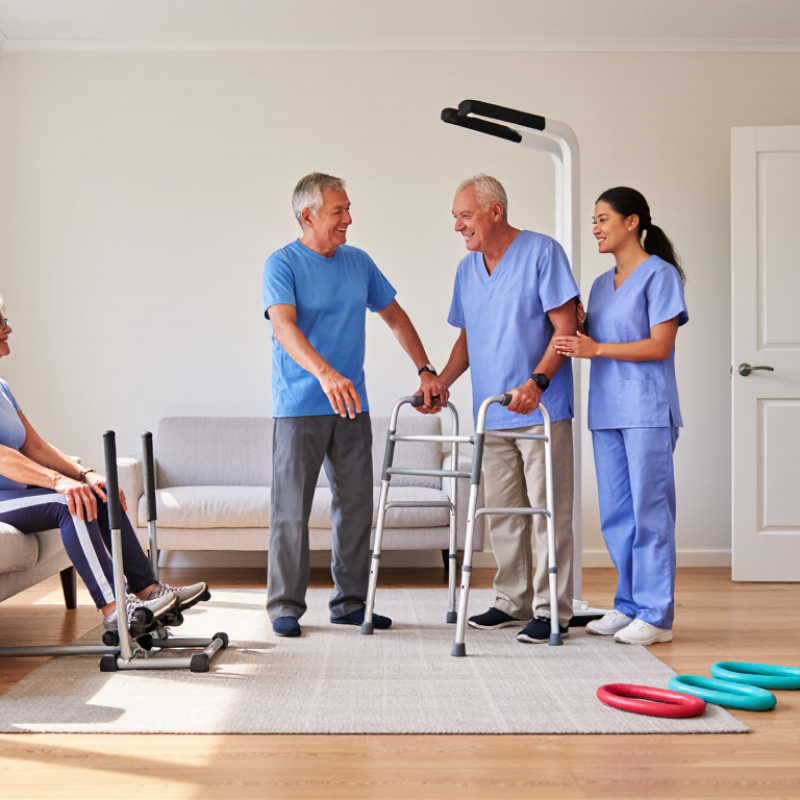
Choosing rehabilitation equipment for seniors in 2026 should begin with a clear conversation about personal goals. One person may want to stand safely from a kitchen chair. Another may hope to walk to a nearby mailbox. These goals shape the equipment choice. A physical or occupational therapist can assess balance, muscle strength, joint movement, vision, and fall history. Do not choose equipment only because it looks advanced.
Health needs can change the entire plan. Someone with arthritis may need padded handles and simple controls. A senior recovering from a stroke may require stable support and guided movement. Heart or breathing problems may limit exercise intensity. Medical advice matters here. Equipment should match the person’s abilities, not create pressure to perform like a younger adult. Small details matter. Is the floor uneven? Can the user reach the brakes? Is there enough space beside the bed? Daily challenges often reveal more than a short clinic visit.
Try the equipment in realistic settings when possible. Check whether the senior can store it, clean it, and use it without assistance. A caregiver should observe transfers and repeated movements, not just one successful attempt. The first choice may be wrong. That is normal. Reassess comfort, confidence, and safety after several days. A device that stays unused in a corner has failed, even if its specifications appear excellent. Keep instructions visible and arrange professional follow-up when pain, dizziness, or new weakness appears.
Match Equipment Types to Mobility, Strength, and Balance Requirements
Choosing rehabilitation equipment for seniors in 2026 should begin with function, not age.
A physical therapist can observe how a person rises, turns, and walks across a room.
The World Health Organization reports that adults over 60 suffer the greatest number of fatal falls worldwide.
A loose cane, unsuitable walker, or poorly adjusted rail can increase risk.
For limited mobility, a wheeled walker may support short indoor journeys, but only when the user can control its speed and direction. A transfer board or bed rail may help someone move safely between surfaces. For reduced strength, light resistance bands, ankle weights, and sit-to-stand supports can build practical power.
The CDC reports that more than one in four older adults falls each year in the United States.
That figure makes supervised strength training difficult to dismiss.
Balance needs different tools.
A stable standing frame, step platform, or foam surface can provide graded challenges during therapy. Begin beside a countertop, with a chair within reach. A therapist should progress difficulty slowly and check footwear, vision, blood pressure, and fatigue.
More equipment is not always better.
A heavier walker may feel safer, yet it can reduce natural movement and encourage poor posture. This is where selection becomes imperfect. Home measurements, caregiver feedback, and repeated reassessment matter.
The National Institute on Aging recommends combining balance, strength, and flexibility activities, rather than relying on one exercise type. Equipment should match today’s ability, while allowing safe progress tomorrow.
Compare Adjustability, Durability, Maintenance, and Available Space
How to Choose Rehabilitation Equipment for Seniors in 2026
Adjustability should guide the first assessment. Seat height, handle position, resistance, and support angles must match the user’s strength and posture. The World Health Organization estimates that 2.4 billion people may benefit from rehabilitation services worldwide. That scale makes flexible equipment increasingly important. A device that fits today may feel unsafe after surgery, fatigue, or changing mobility. Measure the user, not only the room.
Durability matters under repeated daily loading. Check frame joints, weight ratings, fasteners, grips, and moving parts. The U.S. Centers for Disease Control and Prevention reports that more than three million older adults receive emergency treatment for falls annually. Stable construction and non-slip contact points can reduce avoidable hazards, although equipment cannot replace supervision or clinical judgment. I would not trust impressive specifications alone. Test the device with realistic movements.
Maintenance should be simple enough for family caregivers. Look for washable surfaces, accessible screws, replaceable pads, and clear inspection instructions. Record cleaning and adjustment dates. Space also changes safety: allow turning clearance, transfer space, and unobstructed walking paths around the equipment. The United Nations projects that one in six people globally will be aged 60 or older by 2030. Smaller homes will need compact, foldable solutions, but folding mechanisms can introduce wear. That trade-off deserves regular review.
Verify Professional Guidance, Product Quality, and Long-Term Value
Choosing rehabilitation equipment in 2026 should begin with professional guidance, not online ratings. A physiotherapist or occupational therapist can assess gait, grip strength, cognition, and home hazards. Ask for written measurements, fitting instructions, and a clear review date. CDC data report that one in four adults aged 65 or older falls each year. A poorly adjusted walker may increase risk instead of reducing it.
Quality claims need evidence. The WHO and UNICEF Global Report on Assistive Technology (2022) estimates that 2.5 billion people need assistive products, potentially reaching 3.5 billion by 2050. This scale makes transparent manufacturing and maintenance information essential. Check load limits, brakes, battery safety, cleaning instructions, spare-part access, and independent testing. For walking aids, ask whether standards such as ISO 11199 apply to the exact product. Do not treat a certificate screenshot as proof. Request its number and issuing laboratory.
Long-term value includes safe use, repairs, training, and changing abilities. Compare total costs over three years, including servicing, replacement tips, batteries, and delivery. A lower purchase price can become expensive after repeated failures. Still, no checklist is perfect. A therapist may recommend simplicity, while relatives prefer extra features. Choose equipment the senior can use confidently beside a bed, during a bathroom turn, and outdoors. Recheck the fit after illness, weight change, or a fall. Document what worked, and question what did not.