How to Choose the Best Functional Trainer for Your Gym?
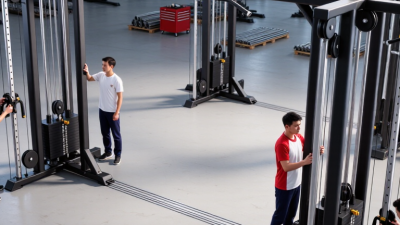
Choosing the best Functional Trainer starts with understanding how your members actually train. The American College of Sports Medicine’s 2024 Worldwide Survey of Fitness Trends ranked functional fitness ninth among predicted industry trends. That finding signals continued professional interest, but it does not prove every gym needs the same machine. A busy commercial floor, a small studio, and a hotel fitness room face different space, usage, and maintenance demands.
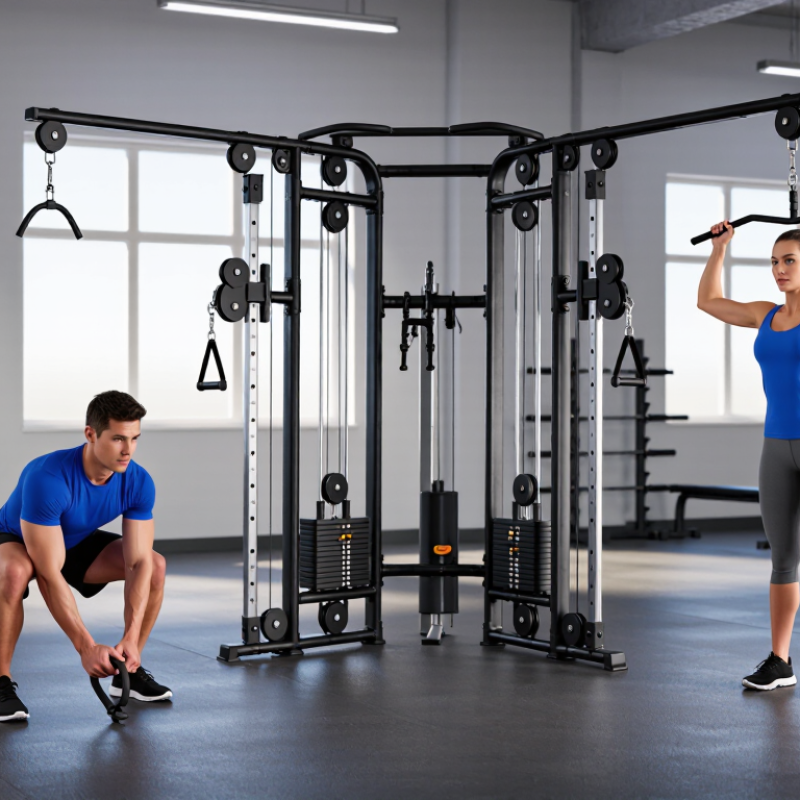
The right choice should fit the room as carefully as it fits the workout. Compare the trainer’s footprint, cable adjustment range, weight-stack increments, pulley smoothness, and capacity for simultaneous users. Picture a member setting a handle low for a cable row, then moving it overhead for a lift. Are adjustments quick and intuitive? Can staff inspect the cables and upholstery without dismantling the unit? These details shape daily usability. Small frustrations accumulate.
ACSM’s survey reflects professional expectations, not a product test or purchasing standard. Treat it as context, then assess your own member feedback, floor plan, and service budget. A feature-rich model may look impressive, yet consume space your gym cannot spare. I have to admit, equipment comparisons often underweight maintenance. That deserves a closer look. Ask suppliers for clear warranty terms, replacement-part availability, and a demonstration under realistic use. The best Functional Trainer is not automatically the largest or most expensive; it is the one your members can use safely, consistently, and comfortably.
Match Training Goals to ACSM’s 2-Day-Per-Week Strength Guideline
How to Choose the Best Functional Trainer for Your Gym?
Match Training Goals to ACSM’s 2-Day-Per-Week Strength Guideline
A functional trainer should help members train major muscle groups at least twice each week, in line with ACSM guidance. That schedule works best when the equipment supports exercises people can repeat and progress safely. Start with the basics. Can users perform presses, rows, squats, and hip-hinge movements with smooth cable travel? Are the handles easy to adjust between sets? These practical details can matter more than an impressive list of attachments.
For general strength, choose a trainer with a useful range of resistance and pulley positions. Adjustable pulleys allow members to work at different angles and adapt movements to their mobility. Check the weight increments, cable length, and frame stability in person if possible. Small rooms need clear space around the unit, not just a compact footprint. That matters. A crowded station can make regular training less convenient.
Match the setup to who will use it. Beginners may benefit from clear adjustments and stable handles; experienced lifters may need higher resistance and more loading options. I would not assume one machine fits every goal. Some trainers feel smooth during a row but awkward during a standing press. Test common movements before deciding. Then consider whether the equipment makes it realistic for members to return for two strength sessions each week. A plan can look excellent on paper and still be hard to follow.
Compare Weight-Stack Capacity and 1:1 or 2:1 Cable Ratios
A functional trainer’s weight-stack capacity should match the people and exercises it will serve. Check whether the listed figure applies to each stack or both combined. Two 150-pound stacks may provide 150 pounds per cable, not 300 pounds at one handle. Small details matter. Also inspect the weight increments: 5-pound steps can feel limiting for lighter rehabilitation-style work, while larger jumps may suit stronger users less well. A bigger stack is not automatically better.
Cable ratio changes the resistance you feel and the distance the handle travels. With a 1:1 ratio, a selected 100 pounds produces roughly 100 pounds of handle resistance, before friction. With a 2:1 ratio, it is roughly 50 pounds, while the cable travels about twice as far. That can make controlled raises and longer-range movements feel smoother, but heavy pulls may require more stack capacity. Test both sides. A spec sheet can look tidy, yet the machine may feel different during a slow row or a high cable press. Compare the intended exercises, user strength, and available stack before choosing.
Assess Exercise Variety Across Major Muscle Groups
A functional trainer should support more than a long list of cable exercises. Check whether its pulley positions allow comfortable movements for the chest, back, shoulders, arms, legs, and core. A chest press and a low row should feel smooth, with enough room to step into position. Small details matter.
Test movements at different heights. High pulleys can support pulldowns and triceps work; low settings suit curls, rows, and some leg exercises. Adjustable arms make diagonal chops and single-arm presses easier to set up. Try each side separately. Uneven resistance or awkward cable angles can make a useful-looking movement feel less controlled.
Count useful options, not variations that merely change your stance. Can you perform a split squat with a cable, then train your hamstrings without crowding the next station? Check the weight increments, handle changes, and available space, too. The machine may look versatile on paper. A quick test can reveal otherwise. I would also assess whether beginners can adjust it safely without guessing. No trainer fits every gym; a compact setup may limit wide movements, while a larger frame can consume valuable floor space.
Measure Footprint and Check Safety Against ASTM F2276
Measure the trainer’s full footprint, not just its frame. Include the cable arms at their widest setting, the weight-stack access area, and the space needed to step back during a pull. Mark the outline on the floor with tape. Then test the busiest movement paths with people walking through. Small detail. A tape measure cannot model traffic perfectly.
The Health & Fitness Association’s 2024 U.S. Health & Fitness Consumer Report found that 72.9 million Americans belonged to a health club, gym, or studio in 2023. That figure signals why shared equipment needs clear approach and exit routes, especially near busy training zones. Check ceiling height, nearby doors, and accessible circulation against your facility plan. I still allow more room than the drawing appears to require; real traffic is messier.
Review the equipment’s documentation against the applicable edition of ASTM F2276, Standard Specification for Fitness Equipment. It addresses fitness-equipment design and performance, but a standard does not replace an installation-specific risk check. Confirm guards, pinch-point protection, cable condition, stability, and warning labels during inspection. Ask the installer to verify anchoring and floor suitability where required. Then test the trainer through its full cable range, with the area kept clear. Don’t assume. Recheck after rearranging nearby equipment.
Review Adjustability, Maintenance, and EN ISO 20957-1 Compliance
A functional trainer should fit the people who will use it, not just the floor plan. Check whether pulley heights adjust smoothly and lock securely. Test the cable path at low and high positions, including movements from a seated stance. A wide range of settings helps different users train comfortably, but more adjustments can mean more parts to inspect. A polished showroom demonstration can hide awkward repositioning; try changing settings with sweaty hands and limited space.
Maintenance deserves attention before purchase. Inspect cable coatings, pulleys, adjustment pins, and frame joints for wear or looseness. Ask for a clear inspection schedule, replacement-part availability, and cleaning guidance. EN ISO 20957-1 sets general safety requirements and test methods for stationary training equipment. Ask the supplier for current compliance documentation and check whether relevant equipment-specific requirements also apply. A claim on a product sheet is not the same as evidence you can review.
Tips: Ask staff to demonstrate a full adjustment cycle. Note any sticking, cable rubbing, or unclear pin positions. Keep a simple maintenance log, even if it feels overly cautious at first.
Related Posts
-
China Top 10 Functional Trainer Manufacturers
-
Essential Shoulder Rehab Equipment Tips for Effective Recovery?
-
Exploring the Versatility of Exercise Equipment: Features, Benefits, and Ideal Use Cases
-
The Ultimate Guide to Choosing the Best Knee Rehab Machine: Insights and Trends for Global Buyers
-
Finding the Best Home Rehab Equipment: A Comprehensive Guide for Global Buyers
-
How to Choose the Best Rehab Equipment For Home Use?