How to Use Desizing Enzymes for Effective Fabric Processing?
In the textile industry, desizing enzymes play a crucial role in fabric processing. These enzymes effectively remove size agents from woven fabrics before dyeing and finishing. According to a report by TechSci Research, the global market for textile enzymes is expected to reach over $1.2 billion by 2025, driven by a growing emphasis on sustainability in manufacturing.
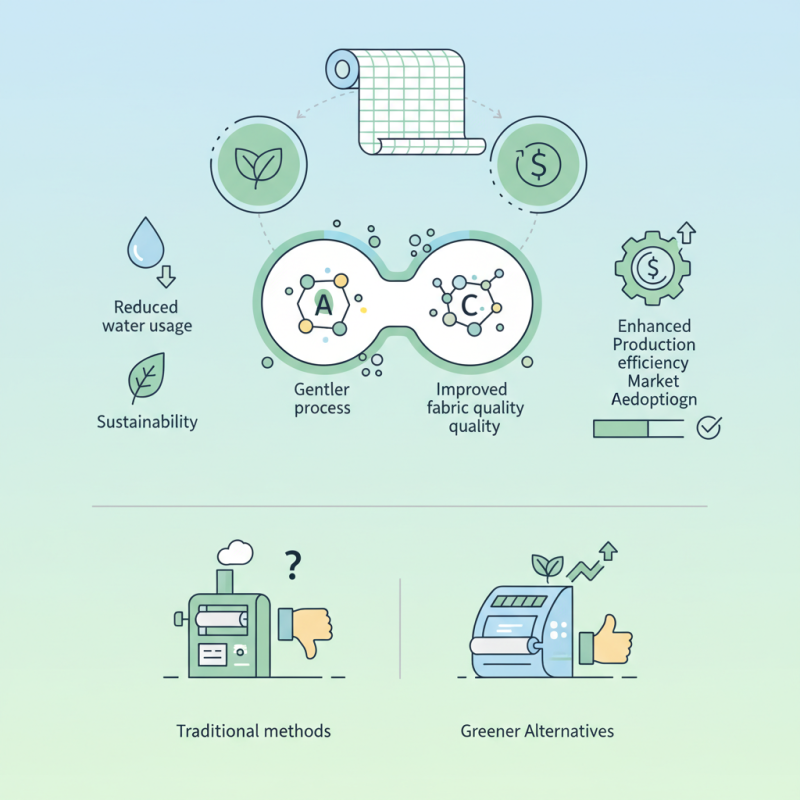
The application of desizing enzymes can lead to significant benefits, such as reduced water usage and improved fabric quality. Enzymes like amylase and cellulase enable a gentler desizing process. However, some manufacturers rely heavily on traditional methods, which can be less efficient. It raises questions about their long-term sustainability and competitiveness in a market moving towards greener alternatives.
While many companies are aware of the advantages, some still underestimate the potential of desizing enzymes. Inadequate understanding can lead to improper usage and wasted resources. The right application of desizing enzymes can enhance production efficiency, but it requires careful consideration and expert knowledge. Embracing this technology is essential for remaining relevant in today’s evolving textile landscape.
Introduction to Desizing Enzymes in Fabric Processing
In fabric processing, desizing enzymes play a key role in enhancing the efficiency of manufacturing. These enzymes effectively remove sizing agents from fabrics before dyeing and finishing. According to a report from the International Journal of Bioengineering, using desizing enzymes can increase production efficiency by up to 30%. This efficiency is crucial in meeting the growing demand for sustainable textile processing.
Natural desizing enzymes, such as amylase, work by breaking down starches. These methods reduce water and energy consumption, addressing environmental concerns. A study published by the Textile Research Journal showed that enzymatic desizing can lower chemical consumption by 40%. However, not all fabrics respond equally to these enzymes, requiring careful selection based on fabric composition.
Tips: Always test the enzyme on a small fabric sample. Monitor the pH level during the process. Overuse of enzymes can lead to fabric damage. Seek a balance between efficiency and fabric integrity to avoid unexpected results.
Types of Desizing Enzymes and Their Functions
Desizing enzymes are crucial in the textile industry. They help remove starch and other sizing agents from fabrics. This process enhances the quality and appearance of textiles. Different types of desizing enzymes serve distinct functions, each contributing to effective fabric processing.
Amylases are among the most common desizing enzymes. They target starch-based sizes, breaking them down into simple sugars. According to a 2022 report by Textile World, the use of amylases can decrease water usage by 30%. Another enzyme, pullulanase, complements amylases. It helps remove resistant starch films that may linger on fabric after amylase treatment. This aspect is often overlooked, leading to inadequate desizing.
Cellulases offer a different approach. They improve fabric softness and luster by breaking down cellulose. They play a dual role in desizing and preparing fabrics for dyeing. However, using cellulases requires careful management. Overuse can lead to fabric damage and loss of durability. Monitoring enzyme concentrations remains a challenge for manufacturers, as excessive use can lead to cost inefficiencies. Adjusting enzyme types and quantities can help achieve the desired balance.
Preparation of Fabrics for Desizing Treatment
Preparing fabrics for desizing treatment is a crucial step in textile processing. The goal is to remove sizing agents from the fabric surface. This allows for better dye absorption and finishing. The first step is to thoroughly inspect the fabric. Look for any contaminants or irregularities. A clean fabric surface enhances enzyme efficiency.
Next, pre-treat the fabric with warm water. This helps in softening the sizing agents. Maintain a consistent temperature, ideally around 60°C. A steady temperature aids enzyme activity. However, it's essential to monitor the time of treatment carefully. Overheating can damage the fibers. Additionally, consider the type of fabric you are working with. Some materials may require specific pre-treatment conditions to achieve the best results.
Once pre-treatment is complete, rinse the fabric to eliminate any residual agents. This ensures that the enzymes can work effectively during the desizing phase. It’s worth noting that not all fabrics respond the same way. Some may require multiple rounds of treatment to achieve the desired level of cleanliness. This process may take time and adjustments. Reflection on results can lead to improved methods in future treatments.
Fabric Desizing Efficiency by Enzyme Type
This chart illustrates the efficiency of different desizing enzymes used in fabric processing. Each enzyme's effectiveness is measured in terms of the percentage of starch removal after treatment.
Application Methods for Desizing Enzymes
Desizing enzymes are essential for effective fabric processing. They help remove sizing agents, making fabrics softer and easier to dye. Several application methods can enhance their effectiveness.
Spraying is one common method. It allows for even distribution of enzymes on the fabric surface. This method is particularly useful for delicate fabrics. A recent industry report indicated that spraying can increase enzyme efficacy by up to 30% compared to immersion methods.
Another effective application method is dipping. In this case, the fabric is immersed in a solution of enzymes. This technique provides better penetration, especially for thicker fabrics. However, it may require longer processing times. An interesting statistic shows that dipping can reduce residual sizing by 50% more than spraying alone.
Tips: Ensure the water temperature is optimal. Too hot or too cold can lessen enzyme activity. Always test a small fabric sample first. This prevents unexpected damage during mass processing. Monitoring pH levels is crucial as well. It can significantly affect enzyme performance, sometimes leading to suboptimal results.
Evaluating Fabric Quality After Desizing Process
After the desizing process, evaluating fabric quality is crucial. This phase ensures that the fabric meets the required standards. Feel free to perform visual inspections. Look for any remaining sizing agents that may have affected texture. You can also assess the shine of the fabric. A dull appearance might indicate issues.
Conduct physical tests on swatches. Test the fabric’s strength and flexibility. Use a tensile tester if available. A fabric that tears easily signals problems. Also, consider the drape of the fabric. If it doesn't hang well, further treatment might be necessary.
Color consistency is another important aspect. If discoloration occurs post-desizing, it may ruin the entire batch. Take notes on areas that need improvement. Your evaluation should lead to adjustments in the desizing process. Reflect on the methods used. Are they suitable for the fabric type? Continuous evaluation and recalibration are key to achieving optimal results in fabric processing.
