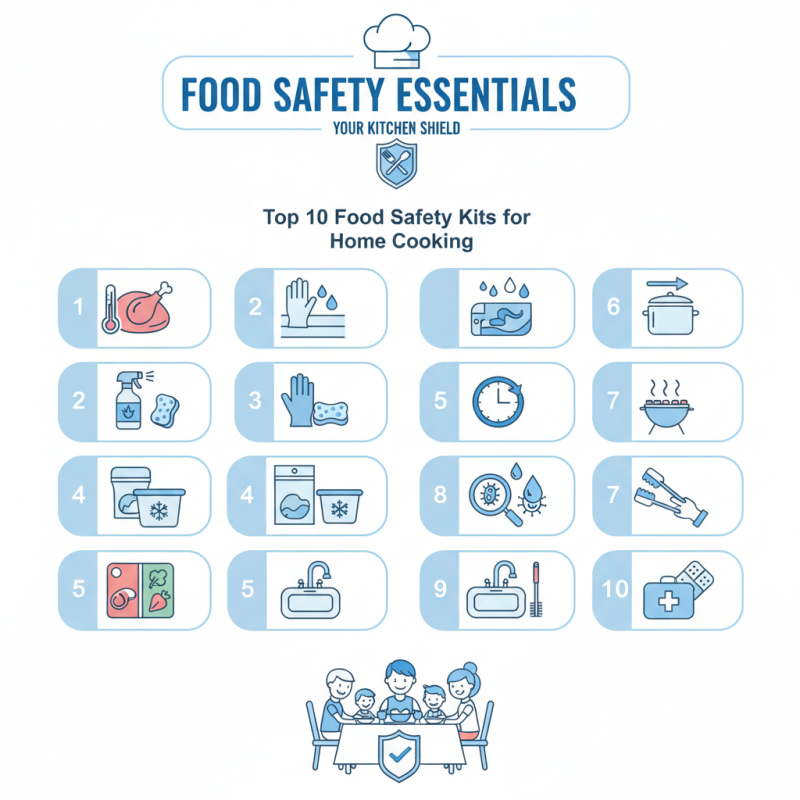
Top 10 Food Safety Kits You Need for Home Cooking?
In today's kitchen, safety is paramount. Food Safety Kits can help ensure a safe cooking environment. These kits are essential for every home chef. They provide the tools and resources needed to prevent foodborne illnesses.
Imagine preparing a meal without the right utensils. A missing thermometer or food storage bags can lead to contamination. Food safety kits eliminate this risk. They often include items like gloves, thermometers, and sanitizers. These simple tools can make a significant difference in your cooking routine.
However, many people overlook their importance. It's easy to feel confident in the kitchen. Yet, careless habits can lead to food safety risks. Investing in food safety kits is a reflection of responsibility. The right tools can keep your family healthy. It's crucial to reassess your cooking practices regularly. Embracing food safety kits is a step towards more secure home cooking.
Essential Components of a Home Food Safety Kit
A home food safety kit is vital for any kitchen. It helps ensure that cooking and food storage are done properly, minimizing health risks. A meat thermometer is essential. This tool accurately checks the internal temperature of meats, helping prevent foodborne illnesses.
Another important component is a set of color-coded cutting boards. Each board serves a specific purpose. For example, one can be used for raw meat, while another is for vegetables. Using separate boards reduces cross-contamination.
A reliable food storage container is crucial too. These containers should be airtight to keep food fresh and safe from pests.
Don’t forget about sanitizing wipes. They help clean surfaces quickly after food prep. It’s easy to overlook wiping down counters. A checklist can serve as a gentle reminder. Lastly, disposable gloves can help maintain hygiene while cooking. However, it's common to forget to change them between tasks. Reflecting on these habits is essential for better practices in home cooking.
Understanding Foodborne Illnesses and Their Prevention
Foodborne illnesses can ruin a gathering or a simple dinner at home. These illnesses occur when foods are contaminated with harmful bacteria, viruses, or parasites. Symptoms can include nausea, vomiting, and diarrhea. It’s alarming to think that millions suffer each year. Prevention starts with understanding common sources of these pathogens.
Improper food handling is a major risk factor. Washing hands before cooking is crucial. However, many overlook this step. Cross-contamination happens easily if raw meats touch other food or surfaces. Using separate cutting boards for vegetables and meats can help, but not everyone follows this guideline. Also, cooking food to the right temperature is vital. Without a food thermometer, many cook food that looks done but isn't safe.
Storing leftovers correctly can also be tricky. Many people leave food out for too long. Bacteria grow rapidly in the danger zone of temperatures. Keeping your refrigerator organized and checking expiration dates can minimize risks. Don't forget to clean surfaces frequently. The kitchen often harbors hidden germs. Awareness of these factors is essential, yet not everyone implements these strategies in their cooking.
Key Tools for Proper Food Storage and Temperature Control
When it comes to food safety at home, proper storage and temperature control are essential. A digital thermometer can help ensure your foods are cooked to the right temperature. This tool reduces the guesswork. You can use it for meats, casseroles, and more. If temperatures are too low, bacteria can grow. Always check before serving.
Food storage containers offer another layer of safety. Clear containers allow you to see what's inside. They help prevent confusion, especially with leftovers. Labeling your food with dates is crucial. It can remind you to consume items before they spoil. Many people forget to check their fridge regularly, leading to waste.
A chilling pad can be valuable, too. It keeps food cool but doesn't replace refrigeration. You might think your food is safe, only to realize it's warm. This risks spoilage, especially in summer. Reflect on how often you grab items from the cooler without checking. Create reminders to assess the state of your food, enhancing both safety and quality in your cooking.
Best Practices for Food Handling and Preparation Safety
When it comes to food safety, proper handling is crucial. Always wash your hands before touching food. Use soap and warm water for at least 20 seconds. This simple step can prevent many foodborne illnesses. Yet, many forget this foundational practice. They rush through preparation or skip it entirely.
Avoid cross-contamination by separating raw and cooked foods. Use separate cutting boards for meats and vegetables. It seems tedious, but it greatly reduces risk. You might find old habits creeping in. Relying on memory can lead to mistakes. A quick glance at your setup can save you from potential issues.
Temperature is another vital factor. Keep hot foods hot and cold foods cold. Use a thermometer to check cooking temperatures. Many overlook this tool. They assume everything is cooked properly. Misjudgments can lead to serious health risks. Don't let assumptions guide your safety practices. Stay vigilant and always check.
Top 10 Food Safety Kits You Need for Home Cooking
| Kit Name | Included Items | Key Features | Ideal For |
| Basic Safety Kit | Thermometer, gloves, cutting board | Basic food handling safety | Beginners in cooking |
| Meat Safety Kit | Meat thermometer, plastic bags, gloves | Ensures proper meat cooking | Meat lovers, home chefs |
| Vegetable Safety Kit | Fruit/vegetable wash, brushes | Prepares fresh produce safely | Health-conscious cooks |
| Allergy Safety Kit | Labels, allergen guide | Prevents allergen cross-contamination | Those with food allergies |
| Baking Safety Kit | Measuring cups, spatulas | Ensures accurate measurements | Baking enthusiasts |
| Preservation Safety Kit | Canning jars, pH strips | Safe canning and storage methods | Home preservers |
| Cleaning Safety Kit | Sanitizers, wipes, sponges | Maintains cleanliness in the kitchen | Household cooks |
| Fish Safety Kit | Fish scaler, thermometer | Ensures proper fish preparation | Seafood lovers |
| Dairy Safety Kit | Storage containers, thermometers | Safeguards dairy products | Cheese and yogurt makers |
| General Safety Kit | Multiple thermometers, measuring tools | Comprehensive food safety | All home cooks |
Regular Maintenance and Updates for Your Food Safety Kit
A well-maintained food safety kit is essential for every home cook. Regular checks ensure all materials are intact. For instance, the CDC reports that nearly 48 million people in the U.S. suffer from foodborne illnesses each year. This data highlights the importance of vigilance in home kitchens.
Food safety kits should include:
- A digital thermometer
- Sanitizing wipes
- Color-coded cutting boards
These items need routine inspections. For example, consider replacing your thermometer batteries every six months. Use a checklist to track expiration dates on sanitizing wipes—it’s easy to forget.
Tip: Always wash hands before food prep. It sounds basic but is often overlooked.
Periodically reassessing your kit can reveal gaps. Perhaps you discover that your food storage bags have holes. It might be time to evaluate your supply. Keeping a well-stocked kit can prevent contamination.
Tip: Don’t wait for a problem to act. Review your kit every month, especially after heavy use.