
Top Coating Powder Manufacturers in China for Global Buyers
China’s coating industry offers global buyers a wide range of manufacturers, product types, and production capabilities. Yet a polished catalog does not tell the whole story. Buyers need to understand how a supplier handles color consistency, powder flow, packaging, and quality checks between batches.
Coating Powder selection begins with the application. A finish for indoor furniture may need different performance characteristics from one used on outdoor metal parts. Ask suppliers for technical data sheets, sample panels, and clear explanations of recommended curing conditions. Details matter. A small shift in film thickness or oven temperature can affect the final appearance, so trial runs are useful before placing large orders.
This guide introduces leading coating powder manufacturers in China for international buyers. It considers product range, manufacturing experience, export support, communication, and the documentation suppliers can provide. These factors can help narrow a shortlist, but they are not guarantees of performance. Fit varies. Buyers should verify current certifications, test products against their own requirements, and confirm delivery terms directly with each manufacturer. Supplier information can change, and a sample that performs well in one process may not behave identically on another production line. Some comparisons are imperfect; available public details may not show every difference in equipment or quality control. The goal is to support informed conversations, not replace technical evaluation. With careful questions and practical testing, global buyers can make a more confident, evidence-based choice.
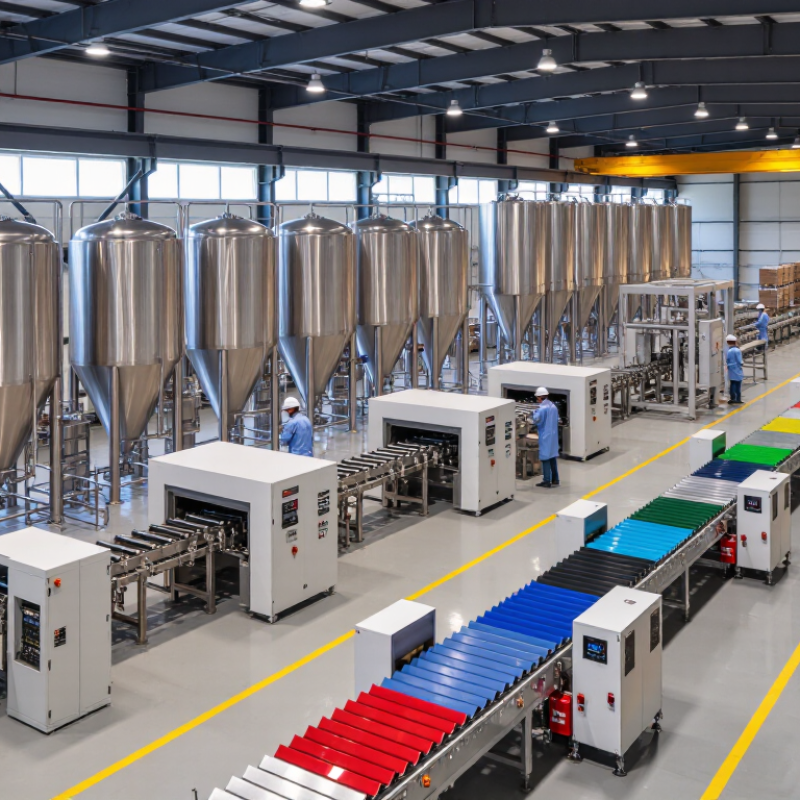
Powder Coating Basics: 50–100 μm Films and Near-Zero VOC Emissions
Powder coating forms a dry film when charged powder particles cling to a prepared surface and melt during curing. For many applications, the finished layer measures about 50–100 μm thick. That is roughly the thickness of a sheet of paper, though actual results depend on part geometry, powder type, and application settings. Corners and recesses can receive less coverage, so a single average reading may not tell the whole story.
The process typically produces near-zero VOC emissions during application because the coating contains no liquid solvent. Near-zero does not mean every production stage has no environmental impact; energy use, pretreatment, and overspray recovery still matter. A properly maintained recovery system can collect unused powder for reuse, while clean, dry compressed air helps prevent surface defects. Small details count.
Film thickness should be checked with a suitable gauge on representative areas, not just a convenient flat panel. Cure also matters. The metal part must reach the specified temperature for the required time; the oven’s air temperature alone is not enough. In practice, complex parts may heat unevenly, and the first setting is not always the right one. A test run, followed by thickness and adhesion checks, gives buyers more dependable process evidence than a broad performance claim.
China’s Leading Manufacturers: Epoxy, Polyester, and Hybrid Powder Coatings
China’s powder coating manufacturers serve global buyers with epoxy, polyester, and hybrid formulations for different environments. Epoxy coatings offer strong adhesion and chemical resistance, making them suitable for indoor equipment, cabinets, and metal components. Polyester powders are often chosen for outdoor use, where color retention and weather resistance matter. Hybrid coatings combine properties of both, though performance depends on the resin balance and intended application. Small details matter.
A reliable manufacturer should explain how its powder behaves on a specific substrate, not just provide a color chart. Ask for technical data, recommended film thickness, and curing conditions. A small test panel can reveal surface defects, gloss variation, or poor adhesion before a full production run. Clear batch records and consistent sampling also help buyers compare orders over time. Results vary. Pretreatment and oven control can change the finish, even when the powder is unchanged.
For global buyers, useful discussions cover packaging, moisture protection, lead times, and technical support across time zones. Request samples for the actual production line when possible; laboratory panels may not reflect factory conditions. Some specifications will still need refinement after testing. That is not necessarily a failure, but it should be documented and addressed with the supplier’s technical team. A careful comparison of epoxy, polyester, and hybrid options helps match coating performance to the part’s real service conditions.
Typical Cure Temperature Ranges for Powder Coating Types
Indicative part-metal temperature windows (°C) for epoxy, polyester, and epoxy-polyester hybrid powder coatings.
Cure windows vary by formulation, film thickness, and oven conditions. These indicative ranges are not a substitute for the coating supplier’s technical data sheet; confirm the required time and temperature for each product.
Supplier Comparison: ISO 9001, Production Capacity, and Batch Consistency
Top Coating Powder Manufacturers in China for Global Buyers
Supplier Comparison: ISO 9001, Production Capacity, and Batch Consistency
Comparing coating powder suppliers takes more than reviewing a product catalog. Ask for a current ISO 9001 certificate and confirm its scope, issuing body, and expiry date. Certification indicates a quality management system; it does not prove every batch will meet your requirements. Request recent inspection records and clarify how the supplier handles nonconforming material. Small details matter.
Tips: Compare production capacity with your expected order size and delivery schedule. Ask whether quoted output reflects normal operations or peak capacity. Request batch records showing color, gloss, particle size, and test results. Check how samples are retained and traced.
For consistency, provide one approved reference sample and written acceptance limits. Then compare several production lots, not just a promising trial batch. Ask how raw materials and process changes are controlled. If a supplier cannot explain its checks clearly, pause and investigate. A polished certificate is not enough. Honestly, perfect uniformity is an unrealistic expectation; the useful question is whether variation stays within agreed limits, and whether issues are reported promptly. Keep specifications, approvals, and shipment records together so differences can be traced later.
Performance Testing: ASTM D3359 Adhesion and ISO 2409 Cross-Cut Methods
For global buyers comparing coating powder manufacturers in China, adhesion testing offers a practical way to check process consistency. ASTM D3359 and ISO 2409 both use cuts and pressure-sensitive tape, but their ratings are not interchangeable. Small details matter.
Under ASTM D3359, the tester makes either an X-cut or a cross-cut, depending on the method and coating thickness. A specified tape is applied and removed under controlled conditions. Ratings run from 5B, indicating little or no coating removal, to 0B, indicating substantial removal. ISO 2409 uses a lattice pattern and grades results from 0, the best classification, to 5, the worst. Neither test measures bond strength as a direct numerical force. That distinction is easy to miss.
Reliable comparisons require consistent panels, substrate preparation, film thickness, cure conditions, cutting tools, tape, and test timing. Ask for the tested sample’s batch details and coating thickness, not only a rating. Look closely at the cut edges. Were chips caused by poor adhesion, or by a rough blade? Results can vary with operator technique. A strong score is useful, but it cannot predict every outdoor exposure or impact. Testing has limits. A second test may be worthwhile when results sit near an acceptance threshold.
| Top Coating Powder Manufacturers in China for Global Buyers - Performance Testing: ASTM D3359 Adhesion and ISO 2409 Cross-Cut Methods | ||||
|---|---|---|---|---|
| Testing Aspect | ASTM D3359 Method A | ASTM D3359 Method B | ISO 2409 | What Global Buyers Should Record |
| Test purpose | Evaluates coating adhesion using an X-cut and pressure-sensitive tape. | Evaluates coating adhesion using a cross-cut grid and pressure-sensitive tape. | Classifies resistance to separation from the substrate after a lattice pattern is cut and tape is applied. | Specify the method and standard edition in the purchase specification or inspection plan. |
| Cut pattern | Two intersecting cuts form an X. | Multiple parallel cuts in two directions form a grid. | Parallel cuts in two directions form a lattice; cut spacing is selected according to the standard and coating thickness. | Record the cutting tool, cut spacing where applicable, and whether cuts reached the substrate. |
| Rating scale | Rated from 5A (best adhesion rating) to 0A (worst). | Rated from 5B (best adhesion rating) to 0B (worst). | Classified from 0 (best; no detachment) to 5 (worst; extensive detachment). | Keep the rating system attached to the result; the scales are not directly interchangeable. |
| Typical application | Often selected for coatings or test panels where an X-cut is appropriate. | Often selected for thinner coatings on rigid substrates where a grid cut is suitable. | Used to classify cross-cut performance of paint and varnish coatings on a prepared test panel or component. | Confirm that the method is suitable for the coating thickness, substrate, and product specification. |
| Result interpretation | Assesses coating removal associated with the X-cut after tape removal. | Assesses coating removal within and around the cut grid after tape removal. | Assesses the amount and pattern of coating separation around the lattice cuts. | Include the numerical rating and a clear description or photograph of the test area. |
| Panel preparation | Results depend on the substrate, surface preparation, coating application, film thickness, curing, conditioning, and test execution. | Record substrate material, pretreatment, dry-film thickness, cure schedule, conditioning, and test date. | ||
| Acceptance criteria | The standards provide test procedures and rating classifications; an acceptable result should be agreed for the specific product and application. | Set the required rating, sampling frequency, and retest rules in the buyer–supplier quality agreement. | ||
| Important limitation | These are classification tests, not direct measurements of absolute adhesion strength. Results from different methods should not be treated as equivalent. | Use additional application-specific testing when service conditions or regulatory requirements call for it. | ||
| Buyer verification note | Request a test report identifying the standard and edition, method, specimen details, coating thickness, curing conditions, rating, and any deviations from the procedure. No single adhesion rating is a universal acceptance threshold for all powder coatings. | |||
Global Sourcing: Typical 160–200°C Cure Ranges, Compliance, and Logistics
For global buyers, a stated 160–200°C cure range is a starting point, not a production guarantee. Confirm whether the temperature refers to the powder, oven air, or the metal part. These are not interchangeable. A thick steel panel may heat differently from a small aluminum bracket, even in the same oven. Ask for the technical data sheet and run a trial using the actual part geometry. Check film appearance, adhesion, and cure before approving volume orders. Small details matter.
Compliance documents should match the destination market and the specific powder formulation. Request a safety data sheet, technical data sheet, and relevant substance declarations. Check that product names, batch numbers, and documents align. Paperwork can look complete and still leave gaps. Import requirements may also vary by country, so confirm current rules with your customs broker rather than relying on a supplier’s general statement. For shipping, request sealed, moisture-resistant packaging and clear storage guidance. Heat exposure during transit can affect powder flow.
Tips: Ask for batch traceability and a pre-shipment sample. Confirm packaging dimensions, gross weight, and shipping marks before booking freight. Keep the first shipment small if possible. It may feel slower, but it can reveal handling or curing issues before they become expensive.