
China Top 10 Powder Apple Cider Vinegar Suppliers?

Powder Apple Cider Vinegar is moving from niche ingredient to a practical format for supplement and food manufacturers. It blends easily into sachets, capsules, drink mixes, and seasoning powders. Yet “powder” does not mean every product is made the same way. Carrier ingredients, acidity, moisture control, and testing can differ sharply between suppliers.

The wider category is growing. Grand View Research estimated the global apple cider vinegar market at USD 1.01 billion in 2023 and projected a 7.7% compound annual growth rate from 2024 to 2030. This figure covers apple cider vinegar broadly, not powder alone. That distinction matters. Public market reports rarely separate powdered vinegar from liquid products, so supplier comparisons need careful reading.

Researcher Carol Johnston and Cindy Gaas wrote, “Vinegar has been used as a condiment and preservative for thousands of years,” in their review “Vinegar: Medicinal Uses and Antiglycemic Effect” (2006). Their work concerns vinegar generally, not a guarantee about powdered products. A useful reminder.

This guide examines ten suppliers through practical signals: ingredient specifications, production capabilities, quality documentation, and export experience. Buyers should request a current certificate of analysis and confirm the powder’s carrier and acidity details. A polished website is not proof of consistent batches. And rankings have limits. Supplier information changes, while public records may not reveal every manufacturing detail.
China Top 10 Powder Apple Cider Vinegar Suppliers?

Powdered Apple Cider Vinegar: Ingredients, Carriers, and Production Methods

Powdered Apple Cider Vinegar: Ingredients, Carriers, and Production Methods

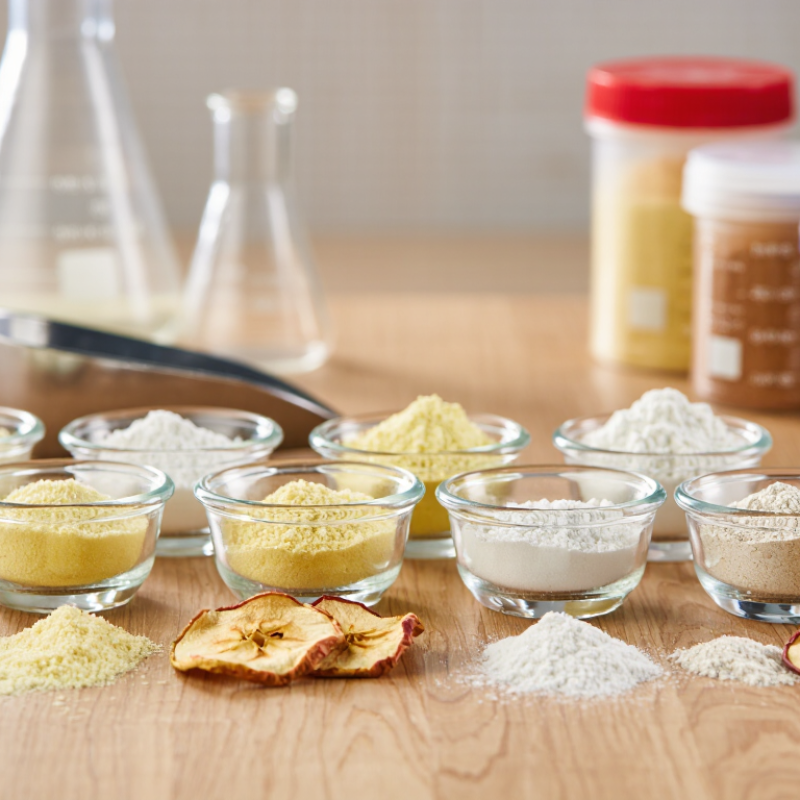
Powdered apple cider vinegar is made by drying liquid vinegar into a more manageable form. The ingredient list may include vinegar solids, a carrier, and sometimes an acidity regulator. Maltodextrin and tapioca-based ingredients are common carriers. They help absorb moisture and support a free-flowing powder, but they also affect the final product’s composition. Read the label carefully. “Apple cider vinegar powder” does not always mean the powder is pure vinegar solids.

Manufacturers may use spray drying, where a fine mist meets hot air, or freeze drying, which removes water at lower temperatures. Each method can influence aroma, color, solubility, and processing cost. A pale powder that disperses quickly may suit drink mixes, while other applications may tolerate a stronger vinegar aroma. These are useful clues, not proof of quality. For supplier evaluation, request specifications for acidity, moisture, carrier content, and batch consistency. Ask how results are tested.

Tips: Mix a small sample into water and check for clumping, sediment, and aroma. Compare the declared vinegar content with the carrier ingredients. Storage matters, too: humidity can turn a free-flowing powder into stubborn lumps. Packaging details deserve attention. They are easy to overlook.

Key Specifications: Acidity, Moisture, Carrier Content, and COA Testing

When comparing China-based powder apple cider vinegar suppliers, check acidity, moisture, carrier content, and the COA method—not just the headline percentage. Codex CXS 162-1987 sets a 4% minimum acidity benchmark for liquid vinegar, expressed as acetic acid. It is not a powder specification. That distinction matters. Ask suppliers to state whether acidity is measured on the powder itself or after reconstitution, including the powder-to-water ratio. A useful COA reports the result as acetic acid and identifies the titration method. Moisture also needs a named test method, such as a validated loss-on-drying or Karl Fischer procedure. Results from different methods may not be directly comparable.

Carrier content can strongly affect the active vinegar solids per serving. Request the carrier type and percentage, plus a clear basis for the calculation. A powder containing maltodextrin, for example, may flow well but deliver less vinegar-derived material by weight. Check that the COA identifies the tested lot, date, and laboratory; AOAC International’s Official Methods of Analysis offers recognized analytical procedures, but the specific method still matters. Ask for batch-level results, not only a typical specification sheet. Some suppliers may not disclose every processing detail. That is worth noting, even when other numbers look tidy.

Liquid ACV Benchmark: U.S. 21 CFR 169.175 Sets Acidity at ≥4 g/100 mL

For buyers comparing powder apple cider vinegar suppliers, the liquid benchmark is a useful starting point. Under 21 CFR 169.175, cider vinegar must contain at least 4 grams of acetic acid per 100 milliliters. This figure describes liquid vinegar, not every powdered product. That distinction matters.

A powder may contain carriers or have different moisture levels, so its acidity cannot be judged by the liquid threshold alone. Ask suppliers how they express acidity: in the powder as sold, or in a specified reconstituted sample. Request the test method, batch results, and mixing ratio. A clear protocol makes comparisons more meaningful. A vague “equivalent acidity” claim leaves room for confusion.

For a practical check, record the powder weight, water volume, temperature, and reconstitution time used in testing. These details can affect results. Also review the ingredient specification and certificate of analysis for each lot. Small gaps in paperwork are easy to overlook. I would not rank suppliers on a single acidity number; consistency, traceability, and transparent testing deserve equal attention.

Liquid Apple Cider Vinegar Acidity Benchmark

U.S. standard: vinegar must contain at least 4 g of acetic acid per 100 mL.

The chart shows the liquid-vinegar regulatory minimum, not measured values for individual powder suppliers. Powder products require their own product specifications and test data for comparison.

Supplier Checks: ISO 22000:2018, HACCP, Traceability, and Export Readiness

For a powder apple cider vinegar supplier, a certificate is only a starting point. Check that ISO 22000:2018 certification covers the actual manufacturing site and product category, then verify its validity with the certification body. Ask for the HACCP hazard analysis, monitoring records, and corrective-action examples—not just a policy document. A dry powder can still face contamination risks during blending, packing, or storage.

Traceability should connect each finished lot to its ingredient lots, production date, and packaging records. Request a mock-recall test and check how quickly the supplier can identify affected shipments. The WHO’s 2015 global burden assessment estimated 600 million foodborne illnesses and 420,000 deaths annually. These figures cover foodborne disease broadly, not vinegar powder specifically, but they show why documented controls matter. Export readiness also means consistent specifications, certificates of analysis, and shipment documents that match the destination market. Small mismatches can delay a shipment.

Tips: Request a recent audit summary, a sample lot-traceability record, and evidence that testing methods match the product. Check moisture and acidity results across multiple lots. One sample is not enough. A polished document set can still hide weak day-to-day controls, so leave room for follow-up questions.

China Top 10 Powder Apple Cider Vinegar Suppliers? - Supplier Checks: ISO 22000:2018, HACCP, Traceability, and Export Readiness

A practical screening checklist for comparing up to 10 powder apple cider vinegar suppliers in China. This is not a verified supplier ranking; no individual supplier credentials or performance claims are represented here.

Supplier Check Evidence to Request How to Verify Screening Result
1. ISO 22000:2018 certification A current certificate showing the certified legal entity, manufacturing site, scope, certification body, issue date, and expiry date. Confirm the certificate with the issuing certification body. Check that the site and activities cover the product being purchased; a certificate alone does not establish product quality. Not independently verified — request and validate.
2. HACCP-based food safety plan Hazard analysis, identified control measures, monitoring records, corrective-action procedure, and verification records relevant to the actual production process. Review the documents and confirm they match the facility and product. HACCP is a food-safety system; a document labelled “HACCP certificate” should not be treated as equivalent to an independently verified management-system certificate. Not independently verified — review records.
3. Product identity and composition Product specification identifying the apple cider vinegar powder, ingredients, processing aids where applicable, and any carrier or drying aid used. Compare the specification, label draft, and batch documentation. Confirm that carriers and other ingredients are disclosed and acceptable for the intended market and application. Not independently verified — obtain a controlled specification.
4. Batch traceability Example records connecting finished-product lot codes to production dates, raw-material lots, processing records, and dispatch documents. Ask the supplier to demonstrate a traceability exercise from a finished lot to its inputs and forward to customers or shipments, subject to appropriate confidentiality protections. Not independently verified — conduct a traceability test.
5. Recall and incident management Written withdrawal/recall procedure, contact and escalation process, and records from a mock recall or comparable exercise. Review the exercise scope, records, identified gaps, and corrective actions. Agree on notification and cooperation requirements in the supply contract. Not independently verified — request exercise evidence.
6. Product testing and laboratory controls Recent batch-specific certificates of analysis and the associated test methods, sampling information, and laboratory details. Check results against the buyer’s agreed specification. For tests requiring external analysis, verify the laboratory’s ISO/IEC 17025 accreditation scope for the relevant method where applicable. Not independently verified — assess reports and methods.
7. Contaminant and microbiological controls Risk-based testing and control information for relevant microbiological hazards, chemical contaminants, and other parameters agreed for the product and destination market. Set acceptance limits with the importer or qualified regulatory adviser for the intended use and destination. Do not assume one test panel or limit applies to every market. Not independently verified — define destination-specific criteria.
8. Change control and consistency Documented controls for changes to ingredients, carriers, process, production site, specification, or packaging, plus retained-sample and batch-release procedures. Confirm that material changes require prior notification and approval where contractually agreed. Compare successive batch documents for consistency against the approved specification. Not independently verified — assess controls and samples.
9. Export documentation readiness Examples of product specifications, commercial and packing documents, origin information, and any destination-required health, registration, or conformity documents. Check requirements for the specific destination, product classification, and intended use with the relevant authorities or importer. Document availability and requirements vary by market. Not independently verified — confirm for the destination market.
10. Packaging, storage, and shipment controls Packaging material details, storage conditions, shelf-life basis, lot coding, and shipping protection information for the powder. Review packaging suitability and handling instructions against the buyer’s transport and storage conditions. Confirm that shipment documents and lot codes match the goods received. Not independently verified — review documents and samples.

Use: Record a separate evidence-based result for each supplier after document checks, sample evaluation, and any required audit. Verify certificates and export requirements directly with the relevant issuing bodies or authorities.

China’s Top 10 Suppliers: Compare Product Range, MOQ, Capacity, and Pricing

China Top 10 Powder Apple Cider Vinegar Suppliers?

A credible top-ten comparison should assess product range, minimum order quantity, verified capacity, and quoted price side by side.

USDA Foreign Agricultural Service’s 2024/25 China Fresh Deciduous Fruit Annual estimated China’s apple production at roughly 48 million metric tons. That figure indicates a large raw-material base, not the output of any individual powder supplier. Ask each candidate for its production capacity, recent test reports, and available grades, such as carrier-free or spray-dried powder. Confirm whether its MOQ applies to samples, standard orders, or custom specifications.

Pricing needs a clear basis. Compare quotes in the same currency and per kilogram, then check the powder’s acidity, carrier content, moisture, packaging, and delivery terms. A lower price may reflect a different formulation or order volume. Request a specification sheet and a recent batch certificate before treating offers as comparable. Capacity figures also need context: annual nameplate capacity is not the same as current available production. This comparison has limits when suppliers do not disclose audited data.

Tips: Request sample quantities and written lead times. Ask for proof. Record every quote against the same specification; otherwise, a tidy price table can still mislead.