
China Top 10 Breathable Shirt Suppliers for Global Buyers
Choosing the right Breathable Shirt supplier in China requires more than comparing catalog prices. Global buyers must examine fabric composition, knitting density, moisture management, factory capacity, and quality controls. A shirt may feel cool in a showroom, yet perform poorly under humid, active conditions. That difference matters.
As textile comfort researcher Dr. Seshadri Ramkumar explains, “Breathability is not a single fabric feature; it is a system of fiber, structure, finish, and use.” This principle guides our review of China’s leading suppliers. Their capabilities may include polyester mesh, bamboo blends, recycled fibers, cotton jersey, and engineered ventilation panels. Testing should also cover air permeability, moisture vapor transmission, colorfastness, shrinkage, and seam durability. Technical claims need evidence.
Real sourcing is rarely perfect. Some suppliers offer excellent fabrics but limited customization. Others provide flexible production yet need stronger documentation. A polished website proves little. Factory audits, sample evaluations, laboratory reports, and clear communication reveal more. Buyers should request a pre-production sample and test it during realistic wear, not only under controlled conditions.
This guide introduces ten Chinese Breathable Shirt suppliers for international buyers. It considers manufacturing experience, product development, export reliability, minimum order quantities, customization, and responsible production practices. The ranking is not absolute. A supplier suitable for sports uniforms may not fit premium casualwear. Fit, climate, target market, and budget still shape the final decision. Small details matter.
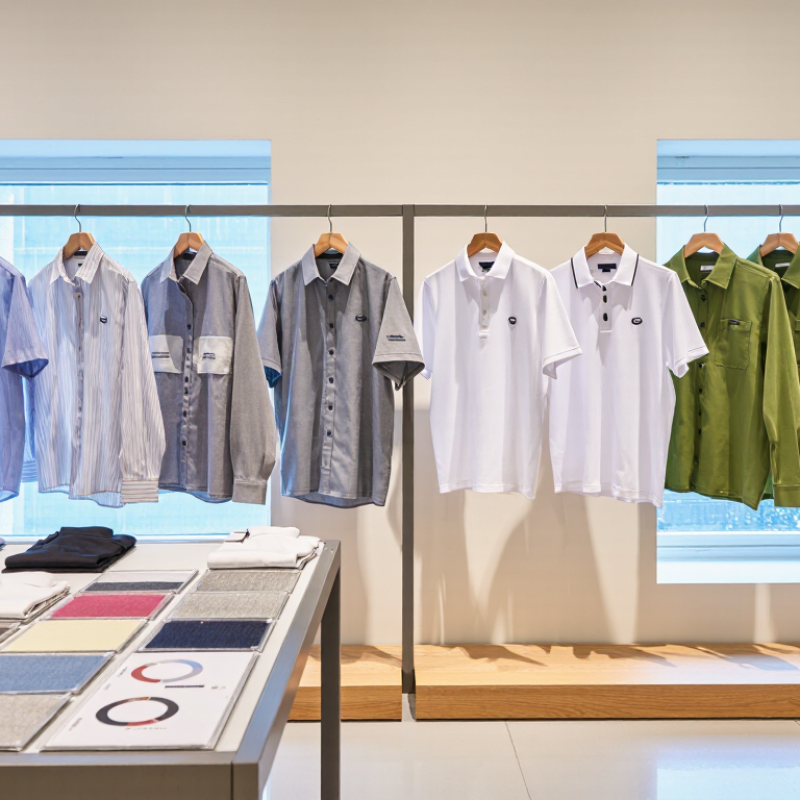
China’s Breathable Shirt Industry and Global Market Overview
China Top 10 Breathable Shirt Suppliers for Global Buyers
China’s breathable shirt industry is expanding with sportswear, travelwear, and workwear demand. China Customs reported textile and apparel exports of about US$293.6 billion in 2023. The figure also reflected weaker global clothing demand and higher inventory pressure. Market growth is real, but uneven.
Breathability Depends on More Than Fiber Content Breathability depends on fiber, fabric structure, and finishing. Textile Exchange reported that polyester represented roughly 59% of global fiber production in 2023. This explains its wide use in quick-dry shirts. Cotton remains important for softness and daily comfort. However, fiber content alone does not prove performance. Buyers should request air-permeability, moisture-management, shrinkage, and colorfastness test results.
Practical Sourcing and Quality Control Practical sourcing starts with measurable details. A supplier should provide fabric weight, usually in grams per square meter, plus knitting or weaving specifications. Mesh panels may improve airflow around the back and underarms. They can also reduce durability. That trade-off is often overlooked. Independent testing under recognized textile standards can verify claims, while sample washing reveals pilling, twisting, and odor retention. Supplier audits should examine production records, quality controls, and worker training. China offers strong manufacturing depth, yet quality varies between factories. A polished sample may hide inconsistent bulk production. Buyers should therefore approve a sealed sample, define tolerance limits, and inspect finished shipments. Even careful buyers sometimes prioritize low price too early.
Key Criteria for Evaluating Chinese Breathable Shirt Suppliers
When evaluating Chinese breathable shirt suppliers, look beyond polished samples. According to the 2024 Textile Exchange Materials Market Report, global fiber production reached 124 million tonnes in 2023. It may reach 160 million tonnes by 2030. This pressure makes material traceability important. Ask for fiber composition, fabric weight, air-permeability results, and moisture-management data.
The fabric should be tested under recognized methods, not described as “cool” without evidence. ISO 9237 can measure air permeability, while laboratory reports should identify test conditions and sample dates. Check whether the supplier controls knitting, dyeing, cutting, and sewing. China remained the largest textile and clothing exporter in 2023, according to WTO trade data, but export scale does not guarantee consistent quality. Ask for production capacity, defect records, inspection procedures, and realistic lead times. Ask for evidence.
A reliable supplier should provide recent certificates, factory photographs, audit records, and traceable material documents. Confirm whether certificates belong to the actual production site. Some documents look impressive but cover another facility. The details matter. Request a pilot order before placing large volumes, then compare color, shrinkage, seam strength, and ventilation after washing. Experienced buyers should also review packaging, communication speed, and corrective-action habits. A supplier that admits a weak process may be safer than one promising perfection. This is an uncomfortable point. But it deserves attention.
Top 10 Breathable Shirt Suppliers in China
China’s breathable shirt supply base serves sportswear, travel, workwear, and daily clothing buyers. This guide focuses on the top 10 breathable shirt suppliers in China, selected through fabric expertise, production capacity, quality control, and export experience. China Customs reported approximately US$293.6 billion in textile and apparel exports in 2023, showing the country’s strong manufacturing depth.
Material choice matters. Textile Exchange’s Materials Market Report 2024 found that polyester represented about 57% of global fiber production in 2023, while cotton accounted for roughly 22%. Leading Chinese suppliers commonly offer polyester mesh, cotton voile, bamboo blends, and quick-dry knitted fabrics. Ask for fabric weight, air-permeability results, shrinkage records, and colorfastness reports. A reliable supplier should provide samples with clear measurements, not vague claims. Small details matter.
Factory visits or third-party inspections can reveal practical differences. Check sewing tension, seam finishing, ventilation panels, and packaging conditions. Request recent audit records and production photographs. Some suppliers communicate well but struggle with consistent sizing. Others produce excellent samples, then change fabric sources. This is where buyers must remain cautious. My ranking would favor transparent documentation over impressive showroom displays. It may still need revision after shipment testing, because laboratory performance and real summer wear are not identical.
China Top 10 Breathable Shirt Suppliers for Global Buyers
Material moisture-regain benchmarks commonly used when evaluating breathable shirt offerings
The chart compares typical moisture-regain values for ten fibers frequently considered by global buyers sourcing breathable shirts from China. Higher moisture regain generally indicates better moisture absorption potential, although final comfort also depends on fabric construction, blend ratio, finishing, and garment design.
Product Capabilities, Customization, and Quality Standards
China’s top breathable shirt suppliers differ sharply in product capability. A serious shortlist should cover cotton, linen, recycled polyester, and blended performance fabrics. Ask for fabric weight, air-permeability results, moisture-management data, and shrinkage after washing. A practical sample test includes three home washes and eight hours of ordinary wear. Small details matter.
Customization can extend beyond color and logo placement. Suppliers may adjust yarn count, mesh structure, collar shape, sleeve length, buttons, labels, and packaging. For warm climates, request laser-cut ventilation panels or lightweight ribbing. Confirm the minimum order quantity for each option. Some factories show broad catalogs but offer limited real development support. That difference appears during sampling.
Reliable quality control should include incoming fabric inspection, inline checks, and final measurement reports. Request test evidence for colorfastness, pilling, seam strength, and dimensional stability from qualified laboratories. Certifications such as ISO 9001 or textile safety standards should be checked for scope and validity, not accepted from a screenshot. I have seen attractive samples fail after repeated washing. No supplier is flawless. The useful question is whether the team records defects, explains causes, and corrects the pattern or process. Clear tolerances, sealed samples, and pre-shipment inspections reduce costly surprises for global buyers.
| Supplier Profile | Primary Product Capability | Common Breathable Fabrics | Typical Fabric Weight | Customization Options | Indicative MOQ | Typical Production Lead Time | Quality and Compliance Practices | Recommended Buyer Segment |
|---|---|---|---|---|---|---|---|---|
| Supplier Profile 01 | Performance polo shirts, golf shirts, and corporate uniforms | Polyester mesh Birdseye knit Polyester-spandex | 130–180 g/m² | Logo embroidery, heat transfer, sublimation printing, custom labels, color matching, and graded sizing | 300–500 pieces per color and style | 25–40 days after approval of samples and bulk materials | Colorfastness, dimensional stability, fabric composition, seam strength, and needle detection checks; compliance documentation may include REACH and OEKO-TEX® Standard 100 where applicable | Sportswear distributors, golf retailers, and company uniform programs |
| Supplier Profile 02 | Casual short-sleeve shirts and lightweight everyday tops | Cotton jersey Cotton-modal Cotton-polyester blend | 140–200 g/m² | Private labels, custom neck tapes, garment dyeing, enzyme washing, softening, and retail-ready packaging | 500–1,000 pieces per color and style | 30–45 days after pre-production approval | Fabric GSM verification, pilling assessment, shrinkage testing, appearance inspection, and AQL-based final inspection | Fashion brands, online retailers, and promotional apparel buyers |
| Supplier Profile 03 | Moisture-wicking active shirts for training and outdoor use | Quick-dry polyester Micro-mesh Recycled polyester | 100–160 g/m² | All-over sublimation, reflective trims, anti-odor finishes, UV-protection finishes, custom artwork, and performance labels | 300–800 pieces per design | 25–40 days after artwork and fabric confirmation | Moisture-management testing, color migration checks, print adhesion testing, UV-finish verification when claimed, and fiber-content testing | Fitness brands, event organizers, outdoor teams, and sports clubs |
| Supplier Profile 04 | Breathable linen-look shirts and resort-style woven tops | Linen-viscose Cotton-linen Tencel™ blend | 110–170 g/m² | Custom weave, garment washing, special buttons, embroidery, woven labels, fit adjustments, and seasonal color development | 300–600 pieces per color and style | 35–50 days after fabric and trim approval | Fiber composition verification, colorfastness, shrinkage, seam slippage, fabric skew, and visual workmanship inspection | Resortwear retailers, summer collections, and hospitality uniforms |
| Supplier Profile 05 | Workwear and industrial breathable shirts | Cotton twill Poly-cotton ripstop Moisture-control woven fabric | 150–240 g/m² | Reinforced seams, utility pockets, reflective tape, functional trims, embroidery, custom grading, and carton labeling | 500–1,000 pieces per style | 35–55 days after technical-pack approval | Seam strength, tear resistance, dimensional stability, colorfastness, trim attachment, and workmanship inspection; applicable EN or ASTM requirements must be specified by the buyer | Industrial distributors, logistics companies, construction firms, and service contractors |
| Supplier Profile 06 | Plus-size breathable shirts and extended-size collections | Cotton jersey Modal blend Stretch piqué | 160–220 g/m² | Extended size grading, relaxed or tailored fits, custom patterns, adaptive closures, labels, and packaging | 300–600 pieces per style | 30–50 days after fit approval | Pattern measurement checks, fit samples, stretch recovery, shrinkage, pilling, colorfastness, and final measurement audit | Inclusive fashion retailers, uniform programs, and direct-to-consumer apparel brands |
| Supplier Profile 07 | Low-impact and recycled-material shirt programs | Recycled polyester Organic cotton Lyocell | 120–190 g/m² | Material traceability, recycled-content options, low-impact dyeing, custom packaging, hangtags, and sustainability documentation | 500–1,500 pieces per style, depending on certified material | 40–60 days after material certification and sample approval | Transaction certificates or scope documents where applicable, fiber-content testing, restricted-substance testing, colorfastness, and production traceability | Sustainable fashion labels, eco-focused retailers, and ESG-oriented corporate buyers |
| Supplier Profile 08 | Premium breathable dress shirts and smart-casual woven shirts | Cotton poplin Cotton seersucker Performance oxford | 100–180 g/m² | Custom collars, cuffs, plackets, mother-of-pearl-style buttons, monograms, woven labels, and individual polybagging | 300–800 pieces per style | 35–55 days after fit and fabric approval | Colorfastness, shrinkage, seam slippage, collar and cuff measurements, button attachment, and needle inspection | Menswear brands, hospitality groups, corporate clothing programs, and premium retailers |
| Supplier Profile 09 | Small-batch custom shirts for startup and test-market programs | Cotton jersey Polyester mesh Viscose blend | 120–200 g/m² | Low-volume sampling, digital printing, stock-fabric selection, custom labels, basic pattern changes, and flexible color options | 100–300 pieces per style, subject to fabric availability | 20–35 days after sample and artwork approval | Pre-production sample approval, measurement checks, print inspection, color comparison, and final random inspection | New brands, promotional campaigns, crowdfunding projects, and pilot orders |
| Supplier Profile 10 | Large-volume private-label shirts for international retail programs | Polyester interlock Cotton-polyester piqué Technical mesh | 140–210 g/m² | Multi-color production, retailer-specific packaging, barcode labeling, carton assortment, automated cutting, and consolidated shipment planning | 1,000–5,000 pieces per style and color | 40–65 days after bulk order confirmation | Inline inspection, end-line inspection, AQL sampling, laboratory testing, carton drop testing where required, and export documentation control | Department stores, wholesalers, supermarket apparel divisions, and global sourcing offices |
How Global Buyers Can Select and Work with the Right Supplier
Selecting among China’s top breathable shirt suppliers requires more than comparing catalog photos. Global buyers should define fabric composition, weight, air permeability, moisture management, sizes, colors, and target price before contacting factories. A practical specification sheet prevents vague quotations. Ask whether the supplier manufactures fabric, cuts panels, or only coordinates production. That distinction affects control, lead times, and accountability. Request recent test reports for breathability, colorfastness, shrinkage, and seam strength. Reports should match the proposed fabric and production batch, not a similar sample.
Evaluate experience through samples, not promises. Send one detailed tech pack and request a pre-production sample with measurements marked on paper. Wear-test it in warm conditions, wash it several times, and inspect collar recovery, stitching, odor retention, and drying speed. Small flaws appear quickly. Compare sample results with the approved specification. A factory audit, video inspection, or independent quality check can reveal crowded workstations, weak packing areas, or inconsistent labeling. These details often predict shipment problems better than polished presentations.
Working terms deserve equal attention. Confirm minimum order quantities, payment stages, sample charges, production milestones, packaging, defect handling, and inspection rights in writing. Use realistic measurement and color tolerances, because absolute perfection is difficult in bulk production. Still, vague tolerances create disputes. Ask how the supplier manages fabric shortages and late approvals. Maintain separate technical and commercial contacts when possible. Keep records of every revision. In practice, buyers sometimes change artwork after approval, then blame the factory for delays. Logistics buffers are often underestimated. Allow time for testing, rework, customs procedures, and seasonal congestion. If communication feels unclear before ordering, it rarely improves afterward.