Activated Carbon Trends at China Import and Export Fair?
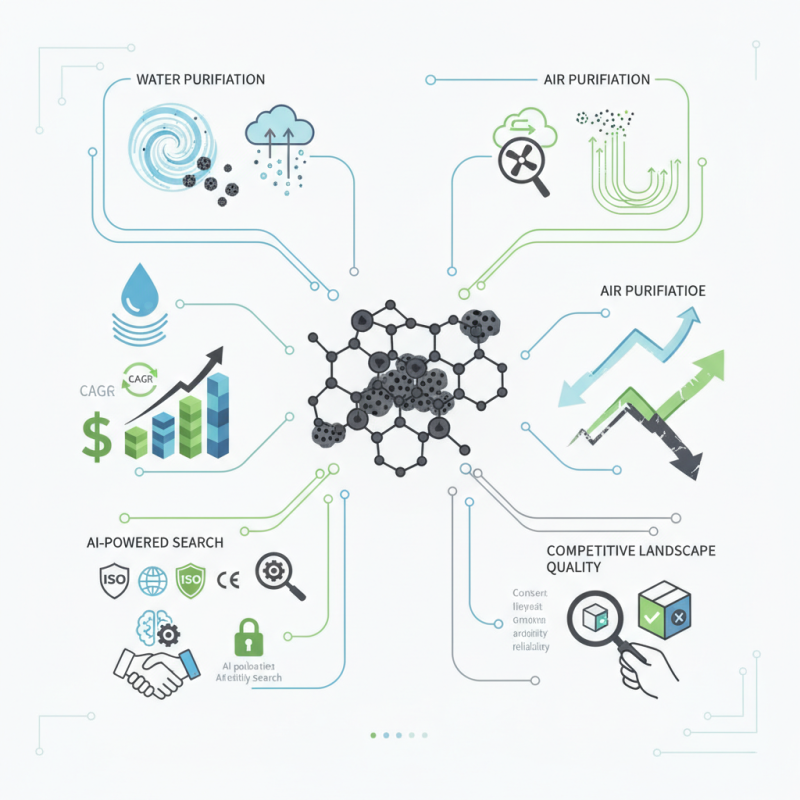
As the 139th China Import and Export Fair approaches, activated carbon trends are gaining significant attention. This material is renowned for its wide applications, particularly in air and water purification. In 2022, the global activated carbon market was valued at approximately $4.21 billion and is projected to grow at a CAGR of 10.5% from 2023 to 2030. Such growth highlights its increasing importance in environmental protection and sustainability.
The fair is expected to showcase innovations in activated carbon, with suppliers presenting products complying with international standards like ISO and CE. The introduction of AI-powered search features enhances procurement efficiency. Buyers can quickly find qualified suppliers, ensuring they can meet strict regulations. However, while technology improves connections, it also raises questions regarding the reliability and authenticity of product claims.
Competition is fierce, and not all suppliers keep pace with quality demands. Some may still offer subpar products despite market pressures. It's crucial for businesses to scrutinize offerings carefully. Establishing robust quality assurance mechanisms will be vital for maintaining standards in the rapidly evolving activated carbon sector. As the fair unfolds, opportunities for growth and collaboration in this domain will be substantial, but diligence remains key.
Activated Carbon Overview: Definition and Uses in Various Industries
Activated carbon is a vital material used across various industries. It is derived from carbon-rich materials like wood, coal, and coconut shells. The substance has a vast surface area, making it effective in adsorption. This quality allows it to trap impurities and toxins, making it crucial for air and water purification.
In the water treatment sector, activated carbon is invaluable. Reports suggest that the global market for activated carbon in water treatment is projected to grow significantly in the coming years. It enhances the efficiency of filtration systems. Additionally, the food and beverage industry utilizes activated carbon for its ability to remove unwanted flavors and colors.
Tip: To maximize the effectiveness of activated carbon filters, users should replace them as recommended. Old filters may not trap impurities well.
Activated carbon also plays a role in the pharmaceutical sector. It is used for drug adsorption, aiding in the purification process. However, challenges exist in ensuring the carbon's quality and consistency. Industries sometimes struggle with sourcing high-grade activated carbon.
Tip: Consider testing sources for consistency in performance. The quality of activated carbon can vary significantly.
Activated Carbon Trends at China Import and Export Fair
Current Trends in Activated Carbon Demand at the China Import and Export Fair
The China Import and Export Fair has become a focal point for activated carbon trends. This year, there is a noticeable increase in demand for high-performance activated carbon. Many exhibitors showcase products that promise better adsorption capabilities. More buyers are focusing on sustainability. Eco-friendly activated carbon options attract significant interest.
Interestingly, traditional uses remain relevant. Industries like water treatment rely heavily on activated carbon. Yet, innovations in this field emerge continuously. Some buyers express concerns about the consistency of quality. They seek assurance in product sourcing and manufacturing processes. Market trends indicate that demand is shifting. This shift requires suppliers to adapt quickly to changing needs.
The variety of applications for activated carbon is impressive. From air purification to industrial uses, the potential is vast. However, challenges exist in educating buyers about product differences. Many still perceive activated carbon as a one-size-fits-all solution. It's crucial for industry players to address these misconceptions. At the fair, discussions highlight the importance of targeted marketing. The right approach can make a significant difference in meeting diverse consumer needs.
Key Suppliers and Manufacturers of Activated Carbon in China
The global activated carbon market is seeing notable shifts, particularly with suppliers in China. Major manufacturers focus on different applications, from air and water purification to industrial uses. According to recent market reports, the demand for activated carbon in China is expected to grow by 6% annually through 2025.
Chinese suppliers play a crucial role in this trend. Many are expanding production capabilities. Some reports indicate that over 60% of the activated carbon exported originates from China. These manufacturers emphasize quality and sustainability, which are increasingly important to global buyers. However, challenges exist.
Quality inconsistencies and varying production standards often arise.
Recent assessments highlight the need for improved transparency in the supply chain. While some suppliers excel, others fall short. This inconsistency may lead to buyer dissatisfaction. It’s crucial for manufacturers to refine processes. Understanding the market can drive better outcomes. As the fair approaches, these dynamics will shape discussions. The focus will be on the future of activated carbon and how suppliers can adapt.
Innovations and Technologies in Activated Carbon Production for Export
The activated carbon industry is witnessing significant innovations and technologies aimed at enhancing production for export. In recent years, production efficiency has increased due to advancements in activation processes. For instance, data indicates that energy consumption in activated carbon production has reduced by about 15% due to new steam activation methods. This is an important trend as many producers strive to minimize costs while adhering to environmental standards.
Moreover, the development of specialized activated carbon for niche applications is on the rise. Reports suggest that the demand for activated carbon in air and water purification has surged, especially in Asia. This sector is projected to grow by 8% annually over the next five years. However, challenges remain, such as the consistency in quality and effectiveness of products. Some manufacturers struggle to meet the stringent requirements set for export.
Waste management and sustainability are increasingly becoming focal points. Innovations include the use of renewable agricultural biomass as feedstock. This transition can lead to more sustainable production methods. Yet, producers face hurdles in sourcing quality biomass consistently. There's also a notable gap in infrastructure for effective recycling of activated carbon, which reflects a need for reflection in the industry. As trends evolve, the activated carbon market continues to adapt and improve, albeit not without its challenges.
Market Challenges and Opportunities for Activated Carbon in Global Trade
Activated carbon has become increasingly significant in global trade. The demand for activated carbon varies across regions. A recent report by the Global Activated Carbon Market Analysis indicated that the market is projected to grow at a CAGR of 10.2% from 2023 to 2030. This growth is fueled by the rising need for air and water purification technologies.
However, challenges persist. The activation process is energy-intensive. Companies are struggling with escalating costs. Additionally, stringent regulatory frameworks in different regions create complications. The fluctuating prices of raw materials also pose substantial risks. According to the World Bank, the average cost of raw material has increased by 15% in the past two years.
Opportunities remain plentiful. Emerging markets display a growing interest in clean air initiatives. Sustainable and eco-friendly production methods could enhance profit margins. Innovative applications in the medical and industrial sectors are also gaining traction. The shift towards sustainable practices is significant.
Companies must adapt quickly
to this evolving landscape to seize potential growth areas.
