
7 Tips for Sourcing Stretch Pique Polo Shirts?
Sourcing a Stretch Pique Polo requires more than comparing fabric prices. Buyers must evaluate fiber content, recovery, supplier capability, testing standards, and delivery reliability. The fabric may look identical on a swatch, yet behave differently after washing. A collar can soften, a placket can twist, or the surface can pill after repeated wear.
Industry data explains why material decisions matter. Textile Exchange’s Materials Market Report 2024 states that polyester represented about 57% of global fiber production in 2023, while cotton accounted for approximately 19%. This balance affects cost, comfort, recyclability, and supply risk. A cotton-rich Stretch Pique Polo may offer a softer hand feel, but it can shrink without proper finishing. Polyester blends often improve shape retention, although they may reduce breathability or create unwanted shine.
McKinsey’s State of Fashion reports continue to identify inventory pressure, traceability, and supply-chain resilience as major apparel challenges. These concerns reach every polo shirt purchase. A low quotation is not always economical. Testing, rework, delayed shipments, and inconsistent sizing can quietly increase the final cost.
Small details matter.
The seven tips in this guide focus on practical sourcing decisions. They cover stretch recovery, fabric weight, yarn composition, colorfastness, factory inspection, certification review, and sample approval. Each point supports clearer communication with manufacturers and more reliable quality control. Still, no checklist is perfect. Supplier claims require evidence, and laboratory results should not replace physical inspection. A strong sourcing process stays curious, measures what matters, and leaves room to question its own assumptions.
Defining Stretch Pique Polo Shirt Requirements
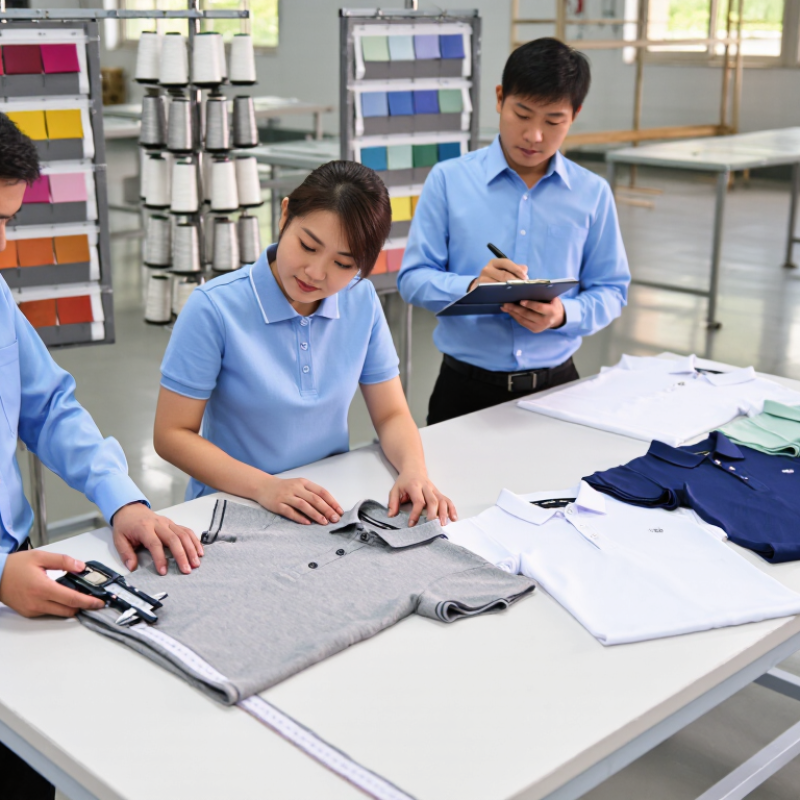
Defining stretch pique polo shirt requirements starts with the wearer, not the supplier’s catalog. State the end use, climate, fit preference, and expected wearing frequency. A golf polo may need stronger stretch than a casual uniform. Record the fiber blend, fabric weight, pique texture, and acceptable color range. For warm conditions, a medium-light fabric can improve airflow. Heavier fabric may provide better structure, but it can feel uncomfortable.
Stretch performance needs measurable targets. Specify horizontal stretch, recovery after repeated movement, and shrinkage after washing. A practical test includes fitting the shirt on a sample wearer, washing it several times, and checking the hem, collar, and side seams. Cotton-rich fabrics often feel natural, while synthetic fibers can improve drying speed and shape retention. The right balance depends on the use. There is no universal blend.
Fit details should be written clearly. Include chest width, body length, sleeve opening, collar height, and tolerance limits. Ask for pre-production samples before approving bulk production. Inspect stitching density, button attachment, placket alignment, and color consistency under daylight. I once focused too heavily on fabric softness and overlooked collar recovery. That mistake affected the final appearance. A detailed requirement sheet reduces misunderstandings, although it cannot replace hands-on inspection. Keep test records, measurement photos, and washing conditions for reliable comparison.
7 Tips for Sourcing Stretch Pique Polo Shirts? - Defining Stretch Pique Polo Shirt Requirements
| Tip | Requirement Dimension | Recommended Specification | Why It Matters | Suggested Verification |
|---|---|---|---|---|
| 1 | Define the Fiber Blend | Cotton-rich pique with approximately 3%–8% elastane, or a comparable stretch fiber construction. | Balances the natural hand feel and breathability of cotton with improved stretch and shape retention. | Confirm fiber content through a laboratory fiber-composition test and review the fabric declaration. |
| 2 | Set Fabric Weight | Approximately 180–240 g/m² for a versatile polo suitable for everyday wear. | Affects opacity, durability, breathability, drape, and shipping weight. | Measure mass per unit area using ISO 3801 or an equivalent recognized textile test method. |
| 3 | Specify Stretch and Recovery | Target comfortable two-way stretch of about 10%–20% with at least 90% recovery after repeated extension, subject to the approved sample. | Reduces restriction during movement and helps the polo retain its original silhouette. | Test widthwise and lengthwise extension, growth, and recovery after repeated stretch cycles. |
| 4 | Control Dimensional Stability | Recommended finished-garment shrinkage: no more than 3% after the agreed care-and-wash procedure. | Maintains size consistency and prevents collar, sleeve, and body distortion. | Conduct home-laundering or industrial-laundering trials according to the final care label; compare measurements before and after washing. |
| 5 | Define Colorfastness Levels | Set a minimum grade of 4 for washing and perspiration colorfastness, with lightfastness specified separately for sun-exposed use. | Limits shade change and color transfer during care and normal wear. | Use gray-scale ratings under applicable ISO 105 or AATCC colorfastness procedures. |
| 6 | Set Pilling and Surface Standards | Target a minimum pilling rating of 3–4 after the agreed number of test cycles; define acceptable levels of slubs and barre. | Protects the visual appearance of the pique texture and reduces premature surface fuzzing. | Evaluate samples using ISO 12945-2, ASTM D3512, or another agreed pilling method. |
| 7 | Confirm Construction and Fit Details | Specify pique structure, collar and cuff rib ratio, placket construction, seam type, size tolerance, and approved measurement chart before bulk production. | Prevents inconsistent fit, collar curling, seam failure, and bulk-production variation. | Approve a pre-production sample, perform measurement inspection, and use an agreed defect-classification standard for final quality control. |
Evaluating Fabric Composition and Performance
Fabric composition should match the polo’s end use, not merely its price. Cotton adds softness and breathability, while polyester improves drying speed and dimensional stability. Elastane supplies stretch, but excessive content can reduce recovery after repeated wear. A practical starting point is 60–95% cotton, 3–8% elastane, or a cotton-polyester blend with controlled stretch. Textile Exchange’s Materials Market Report 2024 states that polyester represented about 57% of global fiber production in 2023, while cotton accounted for approximately 19%. These figures explain availability, but they do not prove comfort or quality.
Ask suppliers for fiber percentages, yarn details, fabric weight, and finishing information. Then request prewash and postwash measurements. ASTM D3107 can help assess stretch and growth, while AATCC 150 supports dimensional-change testing after laundering. For a polo, inspect the collar, sleeve opening, and side seams first. These areas often reveal poor recovery. Check pilling with abrasion testing, such as ASTM D4966, and review colorfastness after sweat exposure. Small details matter.
A fabric that feels smooth under showroom lighting may become stiff after five washes. I would not trust a specification sheet alone. Test at least three production samples from different dye lots. Compare chest width, length, spirality, and recovery after repeated stretching. AATCC TM195 may help evaluate moisture-management behavior, but laboratory results can differ from outdoor wear. That gap deserves attention. Suppliers should provide traceable test dates, laboratory identities, and clear tolerance ranges. Without those records, “performance fabric” remains an attractive claim rather than dependable evidence.
Checking Supplier Quality and Manufacturing Capabilities
When sourcing stretch pique polo shirts, inspect the supplier’s process, not only the sales sample. Request fabric composition, GSM, stretch percentage, recovery data, and shrinkage results after washing. A useful sample should feel stable at the collar, sleeve rib, and side seams. It should recover after repeated pulling.
Textile Exchange’s 2024 Materials Market Report estimates that polyester represented 57% of global fiber production in 2023, while cotton accounted for 22%. This mix makes fiber verification essential. Ask for laboratory reports, yarn details, and traceability records. Then compare them with the physical fabric. Small differences matter.
A supplier using recycled polyester should provide credible transaction or chain-of-custody documents, not vague sustainability language. I have seen attractive samples fail because the fabric spiraled after washing.
Check the knitting machines, dyeing controls, and finishing equipment. Confirm whether the factory can control pique texture across different production lots. Review records for colorfastness, pilling, dimensional stability, and seam strength. ISO 105 methods can support colorfastness testing, while ISO 5077 is widely used for dimensional-change evaluation. Request a pilot batch before full production. Measure ten garments from that batch, including chest width, body length, and collar dimensions. Also inspect needle lines, skipped stitches, loose elastane, and uneven plackets. A factory may pass one test and still miss consistency. That is where supplier audits, in-line inspections, and independent final testing become valuable.
Comparing Samples, Prices, and Minimum Order Quantities
7 Tips for Sourcing Stretch Pique Polo Shirts
When sourcing stretch pique polo shirts, compare physical samples before discussing volume.
Tip 1: Check fabric recovery after stretching the chest and sleeve areas. The fabric should return without visible ripples.
Tip 2: Measure each sample against the same size chart. Small differences in chest width can change your selling price.
Tip 3: Wash one sample twice. Note shrinkage, color change, collar curling, and surface pilling.
I once trusted a soft sample that became noticeably rough after washing. That mistake was avoidable.
Price comparisons need more detail than the quoted unit cost.
Tip 4: Request prices at several quantities, such as 100, 500, and 1,000 pieces. This reveals how strongly production scale affects pricing.
Tip 5: Separate fabric, sewing, finishing, packaging, and shipping charges. A low factory price may hide expensive packaging or freight.
Ask for the same specifications each time. Otherwise, the comparison is unreliable. Keep records.
Minimum order quantities can limit cash flow.
Tip 6: Ask whether the MOQ applies to each color, size, or total order. Some suppliers accept mixed sizes, but require full-color fabric quantities.
Tip 7: Negotiate a trial order with realistic expectations. A lower MOQ may increase the unit price or reduce fabric choices.
Request written details for lead time, replacement terms, and inspection standards.
Samples are useful, but they do not guarantee perfect bulk production.
Reserve budget for one pre-production check.
Confirming Compliance, Customization, and Delivery Terms
7 Tips for Sourcing Stretch Pique Polo Shirts
Compliance should be verified before approving bulk production. Request fiber composition tests, colorfastness results, pilling data, and elastane recovery measurements. A polo can look perfect but lose shape after repeated washing. The 2024 Textile Exchange Materials Market Report estimates global fiber production reached 124 million tonnes in 2023. Polyester represented about 57% of that volume, making traceable fiber documentation increasingly important.
Confirm test methods, laboratory dates, and sample references. Do not accept a generic certificate. Get it in writing.
Customization needs measurable instructions. Specify fabric weight, pique structure, stretch percentage, collar dimensions, button color, and logo placement. Include graded measurements for every size. Ask for a pre-production sample under normal lighting.
Small details matter. The International Trade Centre reports that textile and clothing trade remains highly fragmented across production markets. That makes clear specifications essential when factories, dye houses, and inspectors handle different stages.
A common mistake is approving color from a screen. Physical swatches are slower, but safer.
I would still allow a controlled tolerance, because perfect matching is not always realistic.
Delivery terms should separate production time from transport time. Confirm the shipping term, inspection point, booking responsibility, carton details, and delay procedure.
The 2024 McKinsey State of Fashion report highlights continuing supply-chain volatility and pressure on inventory decisions. Build a buffer for fabric approval and port disruption. Require weekly updates with photographs and quantity records.
A promised date is not a delivery plan.
Include remedies for late shipment, but review them carefully with qualified trade advisors. Perhaps the weakest detail is often the simplest: nobody confirms who owns the final inspection report.