What Are the 2026 Top Strength Equipment Types?
What are the 2026 top Strength Equipment types? The answer depends on the user, facility, budget, and training goal. A busy commercial gym may prioritize selectorized machines, cable systems, and modular racks. A home user may prefer adjustable dumbbells, compact benches, and foldable power racks. Different spaces need different solutions.
Wayne Westcott, a respected strength-training researcher, has emphasized, “Strength training is the key to maintaining functional independence as we age.” His observation remains highly relevant in 2026. Equipment should support controlled movement, progressive resistance, and safe, repeatable training. It should not simply look advanced.
This overview will examine the leading categories shaping the market. These include free weights, plate-loaded machines, selectorized machines, cable crossover systems, functional trainers, squat racks, and connected strength platforms. Smart equipment is gaining attention. Sensors can track repetitions, load, range of motion, and training consistency. Useful data, when accurate.
Yet technology is not automatically better. A durable barbell can outperform a complicated device in many training settings. Maintenance also matters. Loose cables, worn upholstery, and unclear weight markings can undermine user confidence. Small details matter.
The 2026 market still has weaknesses. Product comparisons may exaggerate innovation, while some connected systems depend on subscriptions or proprietary software. Buyers should question those limitations. The best Strength Equipment combines biomechanical suitability, adjustability, durability, user comfort, and credible safety information. This article will compare each type through those practical standards, rather than treating popularity as proof of quality.
Defining the Main Strength Equipment Categories in 2026
The 2026 strength equipment landscape is defined by function, loading method, and user control. Free-weight equipment includes barbells, dumbbells, kettlebells, and weight plates. It demands balance and active stabilization. In a training room, I have seen small weight changes expose weak movement patterns quickly. That practical feedback remains valuable.
Selectorized machines form another major category. They use adjustable pins, guided paths, and padded stations. These designs simplify setup and support controlled resistance. Plate-loaded machines offer a different experience. They combine fixed movement paths with manually added plates. This category often suits users who want heavier loading with less balance demand. Racks and cable systems sit between free weights and machines. They support squats, presses, pulls, and many adjustable exercises within one station.
Bodyweight and functional equipment create a broader category. Suspension straps, benches, resistance bands, medicine balls, and sleds can train strength, stability, and power. Their value depends heavily on setup quality and coaching. Digital tracking may improve exercise records, but data cannot correct poor technique. That is easy to forget. Equipment categories also overlap. A cable rack can support rehabilitation, athletic training, and general strength work. I once treated every multifunction station as equally useful, which was a mistake. Space, maintenance, user skill, and movement goals still determine the better choice.
Comparing Free Weights, Machines, and Functional Training Systems
For 2026, strength training equipment falls into three practical groups: free weights, machines, and functional training systems. Free weights demand balance, coordination, and careful control. A barbell squat can strengthen the legs, hips, and trunk together. Dumbbells also reveal movement differences between the left and right sides. However, poor technique can quickly reduce training quality or increase joint stress.
Machines offer guided movement and adjustable resistance. They suit beginners, rehabilitation settings, and focused muscle work. A seated press, for example, supports the back while the user builds pushing strength. In my coaching experience, machines help people train consistently when balance or confidence is limited. They are not automatically safer, though. Incorrect seat positions and excessive loads still create problems. That detail is often ignored.
Functional training systems use cables, suspension tools, adjustable pulleys, and resistance accessories. They allow pressing, pulling, rotating, and carrying patterns from different angles. These systems can fit small training spaces and support sport-specific movement. A standing cable lift may challenge the legs and torso at once. Yet “functional” does not always mean better. Complex exercises can distract from basic strength development. I sometimes prefer a simpler movement, even when the equipment looks less impressive. Reliable programming should match the user’s experience, mobility, goals, and recovery. A balanced facility may combine all three types, instead of treating one category as universally superior.
What Are the 2026 Top Strength Equipment Types?
Comparing free weights, selectorized machines, and functional training systems by practical training characteristics
The five-point index summarizes common equipment characteristics: movement freedom, stability, exercise variety, learning accessibility, and space efficiency. Higher scores indicate a stronger practical advantage for that characteristic. Free weights offer the greatest movement freedom, machines provide the most guided stability, and functional systems balance versatility with controlled cable resistance.
Examining Smart Features and Technology in Modern Strength Equipment
What Are the 2026 Top Strength Equipment Types?
In 2026, top strength equipment will be judged by intelligence, not steel alone. Smart racks, cable stations, and connected free-weight platforms can use embedded sensors. These sensors measure bar speed, repetition tempo, range of motion, and lifting symmetry. A display may adjust resistance when movement slows. That sounds impressive. In practice, accurate readings depend on calibration, network stability, and correct setup. I have seen small positioning errors distort session data. Smart equipment should explain its measurements, not merely present colorful numbers. Coaches and users need clear units, timestamps, and adjustment history. These details support safer, more repeatable training decisions.
Adaptive programs are becoming more practical. A connected rack or cable station can recommend loads from recent performance and completed repetitions. Motion feedback may flag a shortened squat or uneven press before poor habits become routine. Useful systems offer simple warnings, adjustable sensitivity, and offline controls. Too many alerts can distract lifters. That weakness deserves attention. Technology should assist concentration, not compete with it. Independent testing also matters when equipment claims improved accuracy or personalized progress. A reliable product should disclose testing methods and known limitations.
Data protection is part of equipment quality. Users should control workout records, access permissions, and deletion requests. Secure updates matter because connected machines can influence resistance settings. Human oversight remains essential. A qualified trainer can notice pain, hesitation, or unsafe breathing that sensors may miss. The best designs will combine responsive hardware with transparent software and practical maintenance. They may fail occasionally. That is not a flaw to hide. It is a reason to build safer defaults, manual overrides, and clear support procedures.
Matching Equipment Types to Different Training Goals and Users
In 2026, strength equipment choices should begin with the trainee’s goal, not a fashionable layout. In my coaching observations, adjustable dumbbells suit home users who need varied loads in limited space. They support presses, rows, split squats, and controlled carries. A power rack fits experienced lifters pursuing progressive barbell strength. It needs stable flooring, safe spotting arrangements, and enough ceiling clearance. Beginners may use it safely after learning setup and movement control. Small details matter.
Cable machines match users seeking smooth resistance and multiple exercise angles. They work well for general fitness, rehabilitation-informed training, and athletes refining weak positions. The resistance feels consistent, although pulley friction can change the real load. Plate-loaded machines appeal to users who prefer guided paths and simple adjustments. They can reduce coordination demands, but they may not fit every body shape. That limitation is often ignored.
Kettlebells and weighted sleds suit conditioning-focused users who want strength under movement and fatigue. They are practical for outdoor sessions, but technique can deteriorate quickly when pace replaces control. Older adults often benefit from selectorized machines, lighter free weights, and clear seat adjustments. A qualified professional should consider pain, balance, training history, and recovery capacity before prescribing loads. I still see programs adding weight too quickly. That is a useful warning. Record repetitions, effort, joint response, and next-day soreness; equipment selection should change when those signals disagree.
What Are the 2026 Top Strength Equipment Types? - Matching Equipment Types to Different Training Goals and Users
| Equipment Type | Primary Resistance Method | Best Training Goals | Recommended Users | Typical Load or Intensity Range | Key Advantages | Main Limitations | Space Requirement | Safety and Setup Notes |
|---|---|---|---|---|---|---|---|---|
| Power Rack | Free weights using a barbell, weight plates, and adjustable safety supports | Maximum strength, compound lifting, progressive overload, squats, presses, and deadlifts | Intermediate to advanced trainees, strength athletes, and serious home-gym users | Light technique work to very heavy loads; commonly supports more than 200 kg when properly rated | Highly versatile; supports squats, bench presses, rack pulls, and pull-ups; adjustable safety systems improve training control | Requires a barbell, plates, sufficient ceiling height, and good lifting technique | Large footprint; requires additional clearance around the rack | Use correctly positioned safety pins or straps, stable flooring, and spotter assistance for demanding sets |
| Adjustable Cable Machine | Weight stacks or plate-loaded pulleys with continuous cable resistance | Hypertrophy, functional strength, isolation work, rehabilitation, and multi-directional exercises | Beginners, general fitness users, athletes, and rehabilitation clients | Low to moderate loads with smooth resistance throughout much of the movement | Supports many exercises, accommodates different heights, and provides controlled resistance with less balance demand | Usually costs more than basic free-weight equipment and may require regular cable maintenance | Medium to large footprint depending on the number of adjustable columns | Check cable condition, pulley alignment, attachment security, and weight-stack pin placement |
| Plate-Loaded Lever Machine | Weight plates applied to a guided lever arm | Muscle hypertrophy, heavy pressing, rowing, leg training, and targeted strength development | Intermediate users, bodybuilders, and users who prefer guided resistance | Moderate to very heavy loads; resistance varies according to lever length and machine design | Combines heavy loading with a more controlled movement path; often reduces balance requirements | Less versatile than a rack; the fixed movement path may not suit every user | Medium to large footprint with storage space for plates | Adjust seat and range-of-motion settings before loading; avoid exceeding the machine's rated capacity |
| Selectorized Strength Machine | Pin-selected weight stack connected to a guided resistance mechanism | General strength, muscular endurance, beginner training, and efficient circuit workouts | Beginners, older adults, commercial gyms, and supervised fitness programs | Usually light to moderate loads in small, easy-to-select increments | Simple adjustments, stable positioning, fast transitions, and low learning requirements | Limited movement freedom and usually less transferable to complex free-weight skills | Medium footprint; multi-station units can reduce total floor-space needs | Set the seat and pads to align joints with the machine's pivot points; keep the weight pin fully inserted |
| Dumbbells | Independent free-weight resistance held in each hand | Muscle hypertrophy, unilateral strength, stability, coordination, and home workouts | Nearly all user levels, including beginners and experienced lifters | Very light to heavy loads; adjustable versions allow incremental progression | Compact, versatile, and effective for identifying left-right strength differences | Heavy sets may be difficult to position safely; fixed sets require substantial storage space | Low to medium footprint, depending on storage and weight range | Use controlled lifting technique and secure storage; avoid dropping weights on unsuitable flooring |
| Kettlebells | Free-weight resistance with an offset center of mass | Power, conditioning, grip strength, core stability, and full-body movement training | General fitness users, athletes, and users with basic lifting experience | Light to moderately heavy loads; ballistic movements require appropriate technique | Supports swings, carries, squats, presses, and rotational patterns with minimal equipment | Technical exercises can create unnecessary stress when performed with poor form or excessive load | Low footprint, but exercises require adequate movement clearance | Learn hinge mechanics before swings; maintain a clear training area and use a non-slip surface |
| Resistance Bands | Elastic resistance that increases as the band stretches | Mobility, activation, rehabilitation, muscular endurance, and travel workouts | Beginners, rehabilitation users, older adults, and home or travel exercisers | Light to moderate resistance; exact force changes with stretch length and band type | Very portable, inexpensive, joint-friendly, and suitable for many movement patterns | Resistance is not constant, and bands can lose elasticity or snap if damaged | Very low footprint | Inspect for cuts and cracks; anchor bands securely and avoid using damaged equipment |
| Smith-Style Guided Bar Machine | Barbell resistance on fixed vertical or angled guide rails | Muscle hypertrophy, controlled squats, presses, and solo strength training | Beginners, general fitness users, and lifters who prefer guided bar travel | Moderate to heavy loads, depending on frame strength and bar counterbalance | Integrated catches can support solo training; setup is more controlled than a free barbell | Fixed bar path may not match every user's natural movement pattern; less suitable for some technical lifts | Large footprint with significant vertical clearance | Set safety catches just below the lowest position and verify the bar engages correctly with the hooks |
| Landmine Station | Barbell pivot resistance anchored at one end | Rotational strength, pressing, rowing, core training, and athletic power | General fitness users, athletes, and users seeking a balance between free and guided lifting | Light to heavy loads; perceived resistance changes with angle and distance from the pivot | Offers varied pressing and pulling angles with less balance demand than some free-weight exercises | Requires a compatible barbell and adequate clearance around the moving end | Low to medium footprint | Secure the barbell in the pivot, control the end of the bar, and keep people outside the movement path |
| Weight Bench | Provides a stable support surface for free-weight and machine-assisted exercises | Chest, shoulder, arm, and supported-row training; improves exercise positioning | Home-gym users, beginners, and experienced strength trainees | Depends on the user and external weights; many benches support several hundred kilograms of combined load | Expands exercise options while occupying less space than a full machine | Cannot provide resistance by itself; stability and load capacity vary by construction | Low to medium footprint | Place on level flooring, lock adjustable parts, and confirm the stated capacity includes user plus external load |
| Olympic Weightlifting Platform | Supports free-weight barbell lifting and controlled bar drops | Power development, Olympic lifts, deadlifts, and high-intensity barbell training | Experienced lifters, athletes, and facilities offering technical barbell training | Moderate to very heavy loads, depending on the platform and lifting equipment | Protects flooring, improves lifting stability, and creates a clearly defined training area | Requires technique, bumper-style plates for many lifts, and considerable floor space | Large dedicated footprint with overhead clearance | Use suitable lifting plates, maintain a clear drop zone, and follow qualified coaching for technical lifts |

Evaluating Safety, Space, Durability, and Long-Term Value
What Are the 2026 Top Strength Equipment Types?
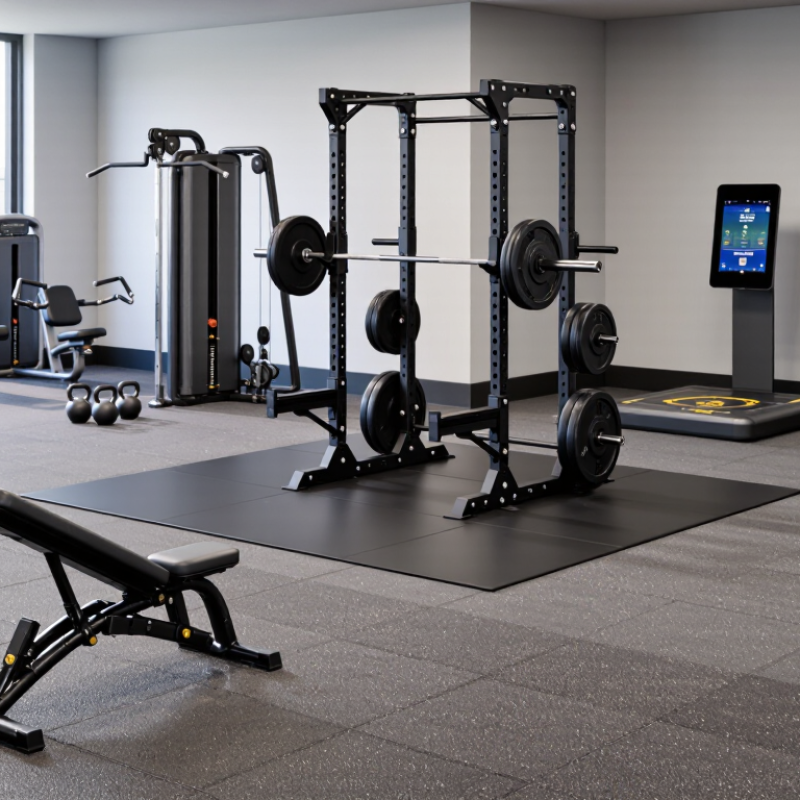
Power racks, cable machines, plate-loaded units, adjustable benches, and free weights remain strong choices in 2026. Each type serves a different training environment. A power rack supports squats, presses, and pull-ups while offering safety arms and adjustable bar positions. Cable machines provide controlled resistance, but their moving parts need regular inspection. Free weights usually require less space and offer excellent movement variety, although they demand better technique and supervision.
Safety begins with the room, not the equipment alone. Leave enough clearance around benches, plates, and moving cables. A crowded corner can turn a simple exercise into a trip hazard. Check locking pins, welds, pulley movement, and bench stability before every session. Equipment should feel steady under load, not merely look impressive. Anchoring may be necessary for taller racks, especially on smooth flooring. I have seen users overlook ceiling height until pull-up training became impossible.
Durability depends on steel thickness, joint quality, finish, and replacement-part access. Powder-coated surfaces resist wear, but they still scratch near plate storage points. Cable systems need clean guides and timely adjustments. Lower-priced equipment can offer good value when used lightly, but heavy daily training exposes weak hardware quickly. Long-term value also includes maintenance time, storage efficiency, warranty clarity, and resale potential. More attachments are not always better. That assumption deserves questioning. A compact rack, reliable bench, and carefully chosen weights may support years of progressive training with fewer repairs.