2026 Best Wine Filter Sheets for Global Sourcing
Choosing the right wine filter sheets in 2026 requires more than comparing prices or micron ratings. Wineries need consistent filtration, reliable documentation, and stable supply across borders. A sheet that performs well in a small cellar may behave differently in a high-volume bottling line. Real-world testing matters.
The best options usually combine food-contact cellulose fibers with carefully controlled filter aids. Their pore structure should match the wine’s clarity target, viscosity, and microbial risk. Coarse sheets can remove visible particles, while tighter grades support polishing before bottling. However, micron labels are not always directly comparable between manufacturers. This detail is easy to overlook.
Global buyers should request technical data sheets, certificates of analysis, batch traceability, and food-contact compliance records. Supplier audits can reveal packaging weaknesses, dusty storage areas, or inconsistent lot control. Samples should be tested with the winery’s actual wine, not only with water. Observe flow rate, pressure increase, aroma retention, and final clarity.
A perfect sheet does not exist.
Cost also includes freight, customs delays, rejected batches, and production downtime. Regional warehouses may reduce risk, but they can increase inventory expenses. Experienced procurement teams should compare total landed cost rather than unit price alone. They should also confirm minimum order quantities and lead times before approval.
This guide evaluates leading wine filter sheets for global sourcing. It considers filtration performance, material transparency, supplier reliability, and practical purchasing risks. Some conclusions may change after field trials. That uncertainty deserves attention, not concealment. The strongest choice is the sheet that performs consistently, documents its quality, and fits the winery’s process.
Wine Filter Sheets: Definition, Purpose, and Key Applications
Wine Filter Sheets: Definition, Purpose, and Key Applications
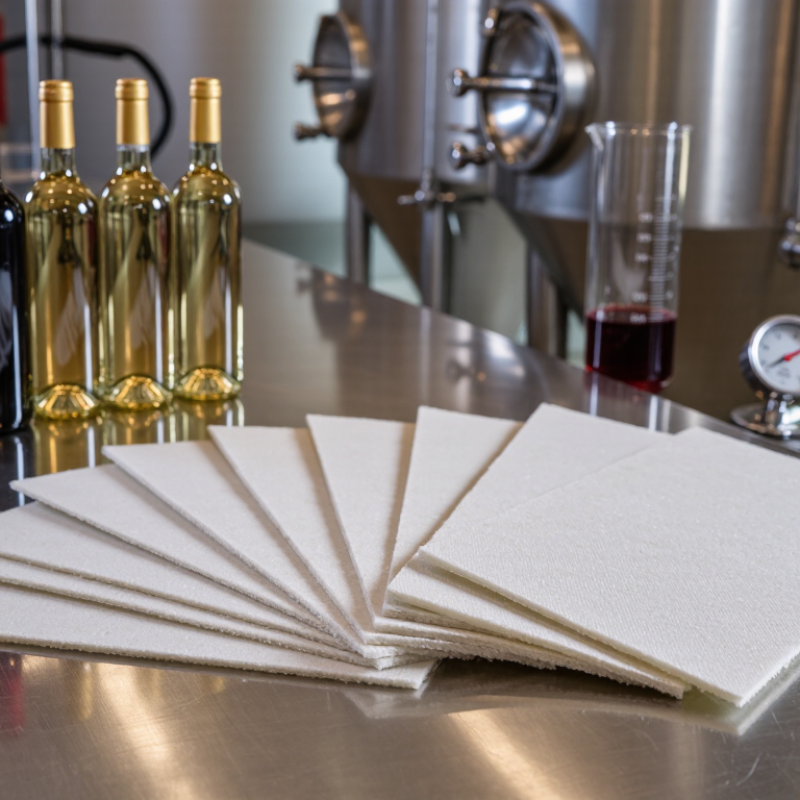
Wine filter sheets are porous depth-filtration materials, usually made from cellulose, filter aids, and binding fibers. Their internal structure captures yeast, sediment, and other suspended particles as wine passes through. Unlike simple strainers, they hold contaminants throughout the sheet. This supports clarification before bottling and can improve visual stability.
Their applications vary by filtration grade. Coarse sheets may remove larger particles after fermentation. Finer grades help polish white, red, and sparkling wines before packaging. Some microbial-reduction sheets support safer filling operations, but they should not replace validated sanitation controls. The OIV reported global wine production at approximately 237 million hectolitres in 2023. That scale creates demand for consistent, traceable filtration materials. Yet the OIV also reported declining global consumption, so buyers may need better yield control, not merely higher filtration capacity.
Tips: Request migration data, wet-strength results, nominal retention ratings, and batch traceability. Check sheet dimensions against the filter housing. A sheet that fits poorly can bypass filtration. Store unused sheets sealed, dry, and away from odors. This detail is often underestimated. During sourcing, ask suppliers for test certificates and performance data using comparable wine conditions. Laboratory results may not match cellar performance. Wine alcohol, acidity, temperature, and solids can change flow rates. Therefore, trial testing remains essential, even when technical documents appear complete.
Types of Wine Filter Sheets for Different Filtration Requirements
The best wine filter sheet depends on the wine’s particle load, clarity target, and processing speed. The OIV’s 2024 statistical report estimated global wine production at 225.8 million hectolitres. That scale increases pressure on reliable, repeatable filtration.
Cellulose depth sheets suit pre-filtration and polishing. Their layered structure captures yeast, lees, and suspended solids without excessive pressure. Coarse grades protect finer sheets during the first pass. Finer cellulose grades improve brilliance before bottling. Sheets containing kieselguhr or perlite provide higher dirt-holding capacity for cloudy wines. They may, however, increase disposal concerns and influence flow performance. Synthetic-fiber sheets can support demanding clarification, but compatibility testing remains essential. “Sterile” claims need careful verification. A nominal micron rating is not equal to absolute retention. That distinction is often overlooked.
Tips: Request retention data, extractables information, and validated flow curves from suppliers. Match sheet area to batch volume and expected turbidity. Track inlet pressure, outlet pressure, and litres processed per sheet. The OIV reported global wine consumption at about 214.2 million hectolitres in 2023, showing why efficient throughput matters. Still, maximum speed is not always the best choice. My practical experience suggests starting with a conservative grade, then adjusting after a small trial. Wine composition changes by harvest. A perfect specification on paper may perform poorly in the cellar. Consider food-contact compliance for every target market, especially when sourcing internationally.
2026 Best Wine Filter Sheets for Global Sourcing
Typical nominal particle-retention ratings by wine filter sheet type
Coarse sheets are commonly selected for pre-filtration, clarifying sheets for reducing visible haze, polishing sheets for brighter wine, and sterile-grade sheets for final microbial-risk reduction. The ratings shown are representative sourcing ranges; actual performance depends on sheet construction, wine composition, pressure, temperature, and operating conditions.
Material, Micron Rating, and Compatibility Selection Criteria
2026 Best Wine Filter Sheets for Global Sourcing
Material, micron rating, and equipment compatibility determine whether a filter sheet performs reliably in different wineries. Cellulose sheets offer balanced flow and broad chemical resistance. Sheets blended with diatomaceous earth can improve clarity, but they may release more fine particles during installation. Select food-contact materials with documented migration testing, traceability, and consistent production records. Supplier certificates should match the shipment, not merely a general product range.
Micron rating needs careful interpretation. Coarse sheets around 5 to 10 microns can remove larger particles before finer filtration. Ratings near 0.45 to 1 micron support brighter wine, but they may reduce flow quickly. A stated micron value is not universal. Testing methods differ between suppliers. I once treated ratings as directly comparable, and that assumption created avoidable trial work. Check the test standard, retention data, pressure limits, and expected throughput. Validate performance with the actual wine, because viscosity, tannins, and suspended solids change results.
Tips: Confirm sheet dimensions, thickness, gasket design, and plate-filter fit before ordering. Ask for samples from the same production lot. Test at the intended temperature and pressure. Inspect the first filtered volume for fibers or off-odors. Keep a small buffer stock for seasonal demand, but review shelf-life conditions carefully. A cheaper sheet may become expensive when flow drops early or repeated filtration is required.
Global Sourcing Standards, Supplier Evaluation, and Quality Control
2026 Best Wine Filter Sheets for Global Sourcing
Global sourcing begins with documented, food-contact quality requirements. Filter sheets should match the wine process, filtration grade, flow rate, and equipment size. Material composition must be clear. Common bases include cellulose, mineral filter aids, or blended fibers. Supplier documents should include a certificate of analysis, safety data, allergen statements, and migration test results where applicable.
Standards differ by destination market. Request evidence for heavy metals, microbial limits, extractables, and packaging hygiene. Do not accept a generic compliance letter without test scope and batch references. A reliable supplier should provide production traceability, change-control procedures, and defined release criteria. Audit records matter. So does factory cleanliness.
Quality control needs practical testing. Check sheet dimensions, weight, thickness, wet strength, flow rate, and retention performance. Test samples with the buyer’s actual wine or a comparable liquid. Sensory neutrality deserves attention; paper odor can appear after storage. Keep sealed retain samples from every lot. Record results.
A checklist is not enough.
Supplier evaluation should include capacity, lead time, complaint response, and contingency planning. Ask how they handle pulp changes or equipment adjustments. These changes may seem minor, but they can alter filtration behavior. Some purchasing teams focus too heavily on price. That is a weakness worth admitting. The lowest quotation can create higher costs through rejected batches, delayed bottling, or repeated testing. Reassess suppliers annually, and review critical specifications whenever the process changes.
Storage, Handling, and Performance Verification Before Use
2026 Best Wine Filter Sheets for Global Sourcing
Filter sheet quality can change during storage, even before installation. Keep unopened cartons in a dry, clean room with stable temperature. Avoid direct sunlight, condensation, and strong odors. Filter media can absorb moisture and nearby chemicals. That risk is easy to miss.
Store sheets flat whenever possible. Do not place heavy cartons on top. Keep the original packaging sealed until use, and follow the supplier’s temperature and humidity limits. Use older inventory first. Check every carton for crushed corners, torn wrapping, water marks, or visible dust. A damaged package needs review, not automatic acceptance.
Handling requires clean, dry gloves and a dust-controlled work area. Confirm the sheet size, pore rating, orientation, and quantity against the purchase specification. Inspect edges before loading. Small edge damage may create bypass paths. Before production, perform a controlled rinse when the process specification requires it. Then verify flow rate, pressure behavior, and filtrate clarity using documented records. Sensory checks can also detect unusual odor or taste, although they should not replace technical testing. A simple hold-time test may reveal wet-strength problems. Not every sheet behaves the same after transport. That is worth remembering. Supplier certificates support verification, but receiving tests provide stronger evidence. If results look acceptable but records are incomplete, pause and investigate.
