
2026 Best Flowable Composite Materials for Global Buyers
Global demand for advanced restorative materials is rising as dentists seek faster placement, reliable bonding, and improved esthetics. Grand View Research reports continued growth in the dental composites market, supported by restorative procedures and material innovation. Fortune Business Insights also forecasts steady expansion through 2032, although estimates differ by market definition.
This article examines the 2026 best Flowable Composite materials for global buyers. It focuses on practical performance, not attractive packaging. Buyers should compare viscosity, radiopacity, polymerization shrinkage, depth of cure, flexural strength, and shelf life. A small syringe may look convenient, yet inconsistent flow can complicate cervical restorations. A well-designed needle tip can reduce waste and improve placement around narrow margins.
Material selection remains application-dependent. Low-viscosity formulas often adapt well to pits, fissures, and small undercuts. Higher-filled versions may offer better wear resistance and surface stability. Research published in the Journal of Dentistry and Dental Materials continues to examine filler technology, polymerization stress, and long-term clinical behavior. Laboratory results are useful, but they cannot fully predict every patient outcome.
There is no universal winner.
International buyers must also verify ISO 4049 compliance, manufacturer quality systems, batch traceability, curing compatibility, and regional registration requirements. Product data sheets deserve careful reading. Marketing language can be vague. Even published market reports have limitations, because regional pricing, product categories, and reporting periods vary. The strongest purchasing decision combines independent evidence, clinical experience, and transparent supplier documentation. That approach is less dramatic, but considerably safer.
What Are Flowable Composite Materials and How Do They Work?
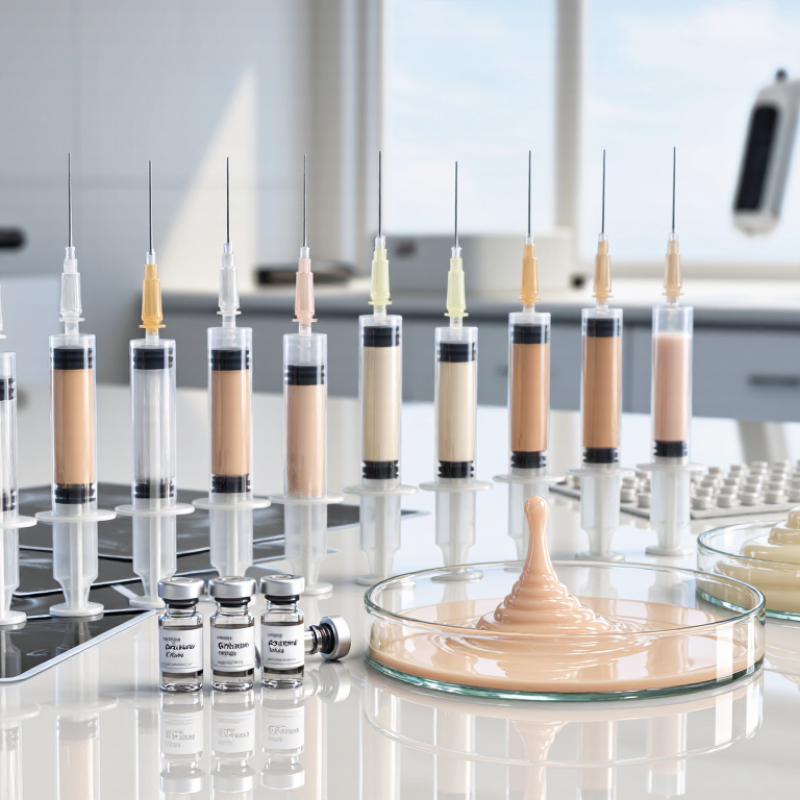
Flowable composite materials are low-viscosity resin-based materials used in restorative dentistry. They contain resin, inorganic fillers, pigments, and curing agents. Their fluid texture allows them to enter narrow spaces, small pits, and irregular cavity surfaces more easily than heavily filled composites.
Under a curing light, the material’s initiators react and create a solid polymer network. This process is called light curing. Proper layering helps reduce shrinkage stress and improves adaptation to the tooth. In clinical work, flowability can save time, but it does not replace careful isolation or sound bonding technique. I have seen excellent results fail because moisture reached the surface. The material is useful, yet not magically forgiving. Its strength, radiopacity, wear resistance, and curing depth depend on filler design, shade, layer thickness, and handling conditions.
Tips: Check the technical data before purchasing. Confirm curing requirements, storage temperature, shelf life, filler content, and regulatory documents for your market. Use thin layers when recommended, and test the light output regularly. Small details matter. A slightly overheated syringe or weak curing light can change handling and final hardness. Buyers should also compare independent test data, not only supplier claims. Some information may look impressive but remain incomplete. Review clinical instructions with a qualified dental professional before use.
Key Composition and Performance Properties of Flowable Composites
Flowable composite materials combine a dimethacrylate resin matrix, inorganic fillers, coupling agents, pigments, and light-activated initiators. Common resin components include UDMA and TEGDMA, while silica and zirconia fillers improve stiffness and radiopacity. Smaller fillers usually create smoother handling, but they can reduce strength when the filler load is limited.
Performance depends on balance. Lower viscosity allows the material to enter narrow pits and line uneven cavity floors. Higher filler loading generally improves flexural strength, wear resistance, and dimensional stability. However, excessive flow may increase polymerization shrinkage and reduce control during placement. ISO 4049:2019 evaluates flexural strength, water sorption, solubility, and depth of cure for polymer-based restorative materials. These tests matter more than attractive packaging claims.
Market data also shows steady demand. Grand View Research’s 2024 dental composites analysis projected continued market growth through 2030, supported by minimally invasive restorative procedures. The Research and Markets 2024 global report similarly identified aesthetic dentistry and restorative care as major demand drivers. Buyers should request independent test results, including shrinkage stress, radiopacity, wear depth, and curing performance at different light intensities. A material that flows beautifully may still disappoint under chewing forces. That weakness deserves attention. Procurement teams should compare batch consistency, storage stability, and working time under realistic clinic temperatures, not only laboratory conditions.
Main Types of Flowable Composite Materials in 2026
Flowable composite materials in 2026 are grouped mainly by filler size, viscosity, curing depth, and clinical purpose. Microfilled flowables spread smoothly across narrow pits and cervical margins. Their polished surface looks attractive, but lower filler loading may reduce wear resistance under heavy chewing. Microhybrid flowables contain mixed-size fillers, offering a practical balance between handling and strength.
Nanohybrid flowables use very small filler particles for improved polish retention and surface detail. They suit small restorations, liners, and minimally invasive repairs when adequate bonding is achieved. Bulk-fill flowables are designed for deeper placement, often in layers up to four millimeters. The exact depth depends on shade, light intensity, and curing time. Do not treat the printed depth as an automatic guarantee.
Some materials are reinforced with higher filler content and behave more like restorative composites. Others remain highly fluid for injection molding techniques and difficult anatomy. Low-viscosity types can reach a narrow fissure in seconds, yet they may slump on a vertical wall. I have seen excellent adaptation fail because the operator rushed contamination control.
For global buyers, technical data matters more than attractive packaging. Check filler percentage, radiopacity, viscosity, shade stability, working temperature, and curing requirements. Independent testing is valuable, but not every published result reflects daily clinical stress. Storage conditions also deserve attention. A material kept in excessive heat may handle differently before its stated expiry date. Local registration, language requirements, and batch traceability should be verified before purchasing.
How to Compare Flowable Composites for Different Applications
Comparing flowable composites starts with the application, not the product label. A narrow cervical lesion may need smooth adaptation and low viscosity. A small occlusal repair demands better wear resistance and adequate radiopacity. Deep areas require dependable curing at the intended light distance. Do not assume “flowable” means universal.
Check filler content, polymerization shrinkage, flexural strength, and handling behavior. Higher filler loading may improve strength, but it can reduce flow around sharp internal angles. A material that levels beautifully may slump on a vertical surface. I have found that a short dispensing tip test often reveals more than a brochure. Observe bubble formation, thread length, and the time needed for sculpting. Small details matter.
Global buyers should also review curing requirements, storage temperatures, shelf life, and batch traceability. Request technical data, safety documents, clinical instructions, and evidence from recognized testing methods. Packaging must protect the material during shipping and repeated opening. Yet laboratory values cannot predict every clinical result. That is an important limitation. Shade stability may vary with thickness, lighting, and finishing quality. Delivery reliability can matter as much as strength. Compare total cost per usable application, not only the syringe price. Reconsider the choice after trial cases, especially when moisture control is difficult or access is limited.
2026 Best Flowable Composite Materials for Global Buyers - How to Compare Flowable Composites for Different Applications
Comparative guide based on typical material characteristics and commonly specified clinical performance requirements
| Flowable Composite Category | Typical Filler Profile | Typical Viscosity / Handling | Recommended Applications | Typical Increment or Cure Guidance | Indicative Flexural Strength | Polymerization Shrinkage Tendency | Main Advantages | Key Limitations | Best Selection Criteria |
|---|---|---|---|---|---|---|---|---|---|
| Low-Viscosity Conventional Flowable | Fine and medium inorganic fillers; generally lower filler loading than packable composites | Very fluid; excellent wetting and adaptation to narrow or irregular areas | Small Class I restorations, Class V lesions, cervical defects, liners, repair of marginal gaps and minimally invasive cavities | Usually placed in thin layers of approximately 1–2 mm unless the product specifically permits greater depth | Often approximately 70–120 MPa, depending on resin matrix and filler loading | Moderate to relatively high; careful layering and light curing are important | Excellent adaptation, easy injection, good access to undercuts and narrow spaces | Lower wear resistance and stiffness than highly filled restorative composites; may require a capping layer in stress-bearing areas | Choose when flow, adaptation and easy placement are more important than maximum load-bearing strength |
| Universal Flowable Composite | Moderate to high filler loading with a balance of flow, strength and polishability | Medium flow; designed to remain in place while adapting to cavity walls | Anterior restorations, small to moderate posterior cavities, non-carious cervical lesions, repairs and preventive restorations | Commonly placed in increments of approximately 2 mm; follow the manufacturer’s curing protocol | Often approximately 100–150 MPa | Moderate; lower than many low-filled flowables but still dependent on resin chemistry and curing | Versatile handling, acceptable strength, good surface finish and broad indication range | May not match the wear resistance, sculptability or contact control of heavily filled posterior composites | Select when one material must cover multiple routine restorative applications |
| High-Filled Injectable Composite | High inorganic filler loading, often using nano- or submicron-sized particles for improved strength and polish retention | Medium to high viscosity; injectable but more resistant to slumping | Posterior Class I and selected Class II restorations, occlusal repairs, small build-ups and restorations requiring improved load resistance | Usually used in controlled increments of approximately 2 mm; proximal contour may need a matrix and shaping instrument | Commonly approximately 120–180 MPa, with substantial variation among formulations | Low to moderate relative to conventional low-filled flowables | Higher strength, improved wear resistance and convenient delivery through a syringe or dispensing tip | Less fluid adaptation than low-viscosity materials; handling can vary with temperature and dispensing pressure | Prioritize filler loading, flexural strength, wear data and reliable proximal handling |
| Bulk-Fill Flowable Composite | Formulated for greater translucency and light penetration; filler loading is commonly moderate | Flowable and self-leveling; designed for efficient placement in deeper cavities | Deep posterior cavities as a dentin-replacement base, provided the material’s approved depth and curing requirements are met | Commonly marketed for approximately 4–5 mm increments; a conventional capping layer may be required for occlusal anatomy and wear resistance | Often approximately 80–140 MPa | Designed to reduce shrinkage stress, but volumetric shrinkage and curing stress remain formulation-dependent | Faster placement, good cavity adaptation and reduced layering time in deep preparations | May require an occlusal covering; adequate light intensity, curing time and access are critical | Verify approved increment depth, curing time, radiopacity, shrinkage-stress data and need for a capping composite |
| Self-Adhering Flowable Composite | Usually contains acidic functional monomers and filler systems intended to support adhesion without a separate etch-and-rinse step | Low to medium flow; simplified dispensing and fewer clinical steps | Small, low-stress restorations, cervical lesions, repairs and selected minimally invasive indications | Usually placed in thin increments; follow the specified rubbing, waiting and curing instructions where applicable | Often approximately 60–120 MPa | Moderate to high, depending on filler loading and resin formulation | Reduced procedural complexity, useful moisture tolerance and convenient application in selected cases | Bond strength and long-term performance may be less predictable than multi-step adhesive protocols in demanding situations | Assess adhesion data, enamel and dentin indication, moisture tolerance and whether selective enamel etching is recommended |
| Reinforced or Fiber-Containing Flowable Composite | Contains reinforcing fibers, short fibers or other reinforcing fillers within a flowable resin matrix | Medium to high viscosity; may show directional handling characteristics | Core reinforcement, stress-distribution layers, large restorations where permitted, repairs and selected structurally compromised areas | Typically placed in controlled increments; often requires an overlay or final restorative layer for contour and polish | Highly formulation-dependent; commonly reported in the approximate range of 100–200 MPa | Variable; reinforcing elements can improve crack resistance but do not eliminate polymerization contraction | Potentially improved fracture resistance, crack bridging and stress distribution | More difficult finishing, limited translucency or polishability in some formulations, and application-specific evidence may be required | Review fracture toughness, fiber architecture, handling instructions and evidence for the intended indication |
| Dual-Cure or Self-Cure Flowable Core Material | Higher filler loading with chemical and light-cure initiator systems for areas where light access may be limited | Medium to high viscosity; designed for controlled buildup and bulk placement | Core build-ups, post spaces and deep areas where dependable chemical curing is necessary and the product is approved for the indication | Bulk placement may be permitted; working time, self-cure time and final curing protocol must be observed | Often approximately 120–200 MPa | Moderate; chemical curing can continue in areas with limited light penetration | Improved cure reliability in deep or shadowed areas, efficient core formation and strong mechanical support | Shorter working time, possible oxygen-inhibited surface layer and compatibility considerations with some adhesive systems | Confirm dual-cure compatibility, working time, radiopacity, depth of cure and post-space or core-build-up approval |
Global Buyer’s Guide to Quality, Compliance, and Supplier Selection
2026 Best Flowable Composite Materials for Global Buyers
For global buyers, quality begins with predictable handling, not attractive packaging. A reliable flowable composite should dispense smoothly, resist slumping, and maintain a stable shade after curing. Check viscosity at controlled temperatures, because a material may behave differently in a cold warehouse and a warm clinic. Review flexural strength, radiopacity, depth of cure, and polymerization shrinkage data. These figures need test methods, not vague claims. Confirm the intended clinical use and follow the manufacturer’s instructions for curing time and light intensity.
Tips: Request samples from several production lots. Ask for a certificate of analysis, safety data sheet, technical file summary, and shelf-life evidence. Verify lot numbers on the tube, carton, and shipping documents. Compliance is destination-specific, so confirm registration, labeling, language, and importer responsibilities before placing a large order. A certificate alone is not enough. Audit the supplier’s change-control process and complaint records when possible.
Supplier selection should also measure consistency during routine use. Evaluate syringe ergonomics, tip compatibility, packaging seals, and storage instructions. Ask how deviations are investigated. I once saw a technically strong material lose buyer confidence because delivery records were incomplete. Small administrative failures matter. Compare lead times, minimum order quantities, replacement policies, and communication speed. Independent laboratory testing may be worthwhile for high-volume purchases, although it increases the budget. That cost can prevent a much larger quality dispute later.
2026 Best Flowable Composite Materials for Global Buyers
Global Buyer’s Guide to Quality, Compliance, and Supplier Selection
This illustrative buyer scorecard uses a 100-point procurement model for flowable dental composite materials. Quality and clinical performance are assessed through factors such as flexural strength, wear resistance, handling consistency, radiopacity, and curing reliability. Compliance review should include applicable requirements under ISO 4049, ISO 13485, ISO 10993, the EU Medical Device Regulation, and relevant national market authorization rules. Supplier audits should verify technical files, batch traceability, certificates of analysis, stability data, and change-control procedures. The weighting is a purchasing framework, not a comparison of company or brand performance.